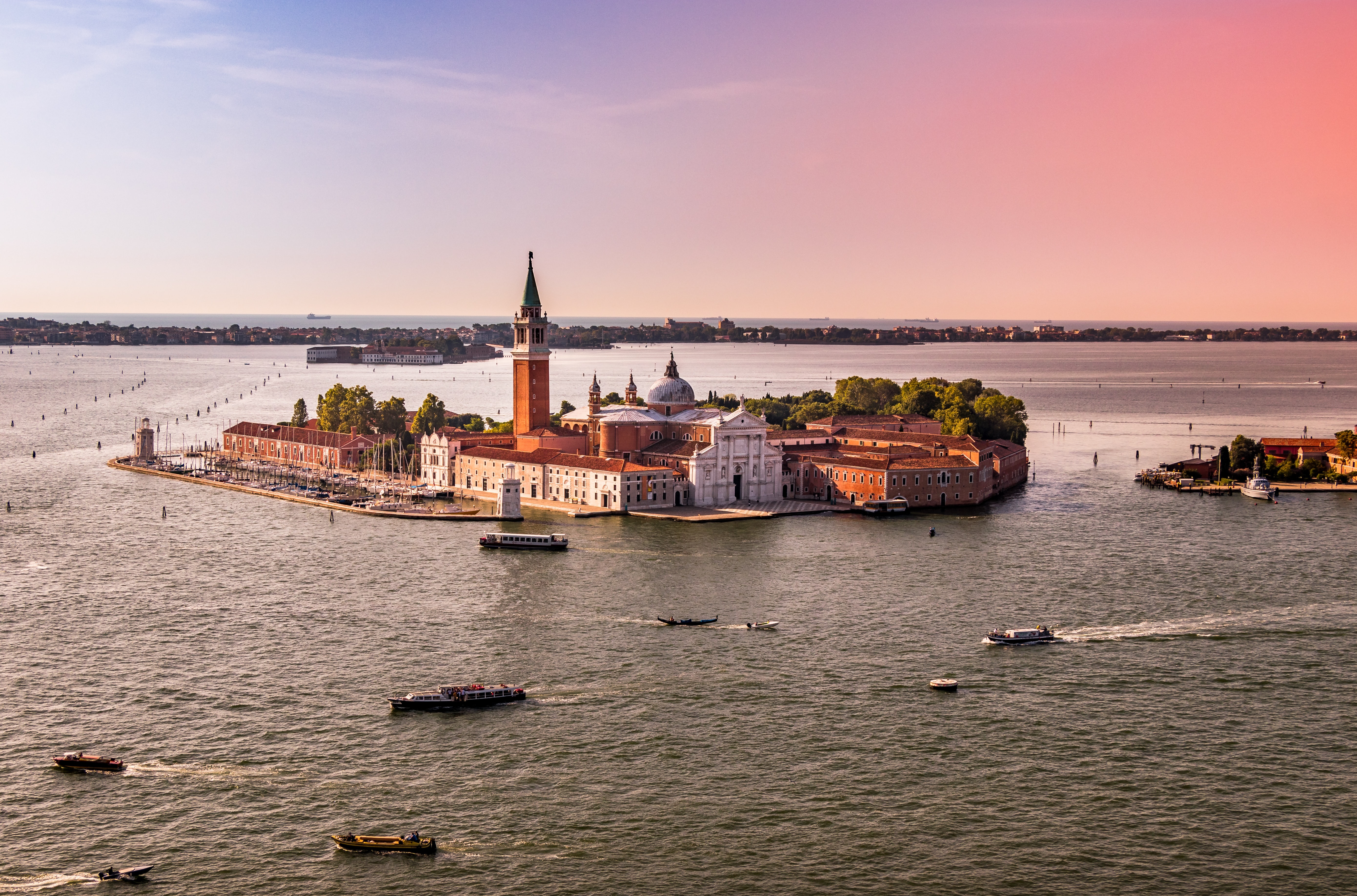
St Mark's Basilica
Located in St Mark's Square (Piazza di San Marco), next to the Doge's Palace, The Patriarchal Cathedral Basilica of Saint Mark — commonly known as St Mark's Basilica — is the most important religious temple in the city, as well as one of the finest examples of Italo-Byzantine architecture.
Teatro La Fenice
La Fenice is a world-renowned opera house and a symbol of the Italian theatre tradition. Its name means "the phoenix", which suits the theatre very well, as it happened more than once that it burned down and had to be reconstructed. La Fenice was originally built in 1755 and witnessed several world-class performances, like the premiere of Verdi's La Traviata. Nowadays, you can either visit the theatre to see its magnificent interiors and learn about its rich history or enjoy a show there during the opera season.
Grand Canal
Canal Grande is the largest canal in town, almost 4 km long and 90-metre-wide in some parts, with an average depth of 5 metres. Public transport is available in the form of gondolas, water taxis, and the popular vaporetti — water buses. Along the canal, which is crossed by three stunning bridges, you'll discover plenty of famous buildings.
Doge’s Palace
Built in Venetian Gothic style and one of the most iconic landmarks of Venice, the Doge's Palace or Palazzo Ducale used to be the residence of the Doge of Venice, as well as the seat of power for the Venetian Republic, which lasted more than 1,000 years. Both the court and the prison were located within the palace walls, but since 1923 the building is better known as a museum.
Lebe, wo du willst
Suchen Sie nach Immobilientyp

Studio, mit Außenbereich
Gesamter Ort

Studio, mit Außenbereich
Gesamter Ort

Einbettzimmer in 4-Schlafzimmer Wohnung
Schlafzimmer

Einbettzimmer in 4-Schlafzimmer Wohnung
Schlafzimmer

Einbettzimmer in 4-Schlafzimmer Wohnung
Schlafzimmer

Studio
Gesamter Ort

Einbett in Mehrbettzimmer in Wohnheim
Bett

Doppel in Mehrbettzimmer in 3-Schlafzimmer Wohnung
Bett

Einbettzimmer in 8-Schlafzimmer Haus
Schlafzimmer

Einbettzimmer in 6-Schlafzimmer Wohnung
Schlafzimmer
Passen Sie an, wer Sie sind
Suchen Sie nach Profiltyp

Studenten
Erkunden Sie eine Vielzahl von Studentenunterkünften in verschiedenen Stadtteilen.

Digitale Nomaden
Ändern Sie die Art und Weise, wie Sie die Welt entdecken, genießen Sie einzigartige Orte mit lebendigen Gemeinschaften.

Profis
Arbeiten Sie mit zuverlässigem WLAN und großartigen Annehmlichkeiten, bleiben Sie produktiv und leisten Sie Ihr Bestes.

Gruppen
Ob groß oder klein, kann eine Herausforderung sein, aber wir können es Ihnen leichter machen.

Familien
Ob eine große Familie oder eine kleine Familie kann herausfordernd sein, aber wir können es Ihnen leichter machen.