
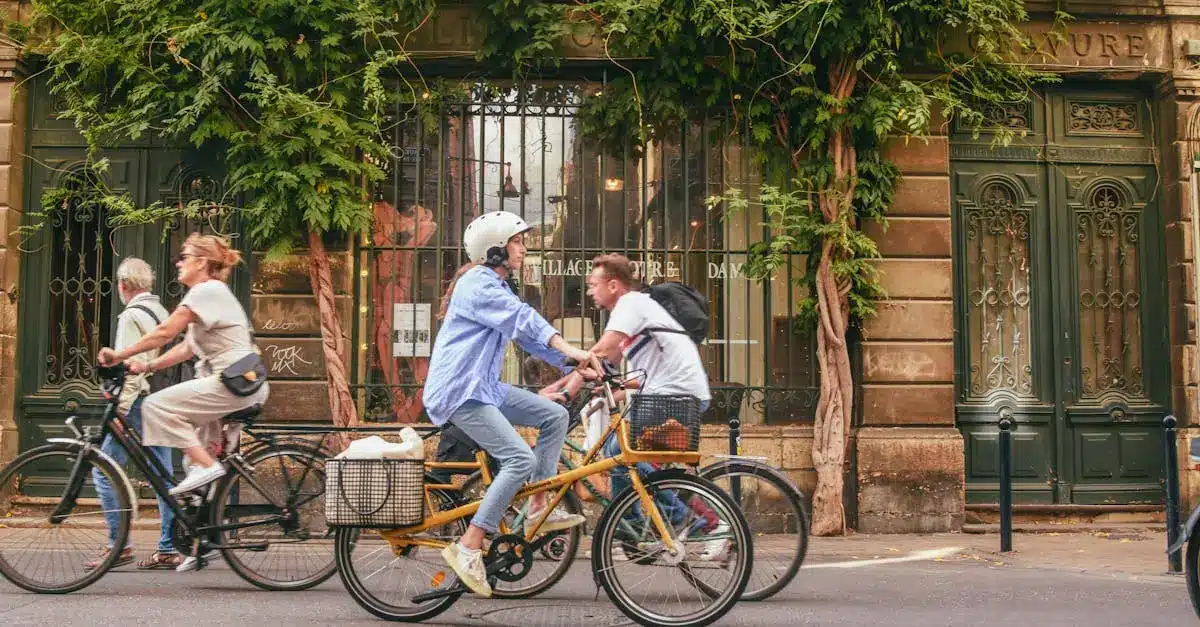
Discover France’s eco-friendly transport revolution: from bike-sharing to e-scooters. Your guide to sustainable travel options in French cities.
France is leading the way in sustainable urban transportation, with cities like Paris and Marseille turning their streets into eco-friendly transport hubs. The once-iconic image of Parisians cycling along the Seine has now evolved into a comprehensive network of green transportation options that cater to both locals and visitors.
Paris recently won the prestigious 2023 Sustainable Transport Award for its innovative approach to urban mobility. The city’s Vélib’ bike-sharing program has become a model for sustainable transportation worldwide. Following suit, Marseille is also expanding its own network of bike lanes and shared mobility services through providers like Lime.
This guide explores France’s diverse eco-friendly transport landscape, from traditional bike-sharing programs to electric scooters and e-bikes. Whether you’re a resident looking to reduce your carbon footprint or a tourist seeking authentic ways to explore French cities, you’ll discover practical tips and insights for navigating France’s green transport revolution.
For a cost comparison before you choose a mobility setup, see transport costs in France.
The Rise of Eco-Friendly Transportation in France
French cities have transformed their urban mobility landscape with innovative sustainable transport options. Paris leads this green revolution, earning the prestigious 2023 Sustainable Transport Award for its commitment to eco-friendly commuting initiatives.
Challenges of Urbanization in France
The rapid urbanization across France has created unique transportation challenges:
- Increased Population Density: Cities face growing congestion, pushing the need for alternative transport solutions
- Air Quality Concerns: Urban areas tackle pollution through reduced car dependency
- Space Optimization: Limited urban space demands efficient mobility options
Government Initiatives for Green Travel
The French government has responded with bold initiatives to promote green travel practices:
- Implementation of Low Emission Zones in major cities
- Tax incentives for purchasing electric vehicles
- €20 billion investment in sustainable transport infrastructure
- Creation of car-free zones in city centers
Local Authorities’ Role in Sustainable Transportation
Local authorities have embraced these changes through:
- Development of dedicated cycling networks
- Integration of smart mobility solutions
- Public transport electrification programs
- Implementation of shared mobility services
Cities like Marseille and Lyon have followed Paris’s example, launching their own eco-friendly transport initiatives. These programs include electric bus fleets, expanded bike lanes, and innovative car-sharing schemes that reduce individual vehicle ownership.
Recent data shows these efforts paying off – French cities report a 15% decrease in private car usage since 2019, while sustainable transport adoption continues to rise across urban areas.
Biking in France: A Sustainable Choice
Biking in France is a game-changer for daily transportation, benefiting both individuals and the environment. French cyclists save an average of €500-€1000 annually compared to car owners, considering expenses like maintenance, fuel, and parking.
Health Benefits of Regular Cycling
Cycling regularly offers significant health benefits:
- Burns 400-600 calories per hour of cycling
- Strengthens cardiovascular health
- Reduces stress levels
- Improves joint mobility
- Builds muscle strength
Positive Environmental Impacts of Eco-Friendly Commuting
When it comes to eco-friendly commuting in France, cycling has a positive effect on the environment:
- Zero carbon emissions during travel
- Reduced noise pollution in urban areas
- Decreased traffic congestion
- Minimal infrastructure wear compared to vehicles
Cost-Effectiveness of Biking
The cost-effectiveness of biking goes beyond immediate savings:
- No fuel expenses
- Lower maintenance costs
- Free parking in most areas
- Reduced healthcare expenses due to improved fitness
French cities are embracing cycling as a year-round transportation option. With mild temperatures, it’s possible to bike during most seasons. Many urban areas have flat terrain, making cycling accessible to people of various fitness levels. Additionally, electric bikes provide support for hillier regions or longer commutes.
Infrastructure for Biking in Urban Areas
French cities have transformed their urban landscapes to accommodate the growing cycling community. Paris leads this transformation with the ambitious Plan Vélo, adding over 130 kilometers of protected bike lanes to its existing network.
Key infrastructure developments include:
- Protected Bike Lanes: Dedicated paths separated from vehicle traffic by physical barriers
- Two-Way Cycle Tracks: Wide lanes allowing cyclists to travel in both directions
- Advanced Stop Lines: Designated spaces at traffic signals where cyclists can wait ahead of vehicles
- Bike Parking Facilities: Secure storage areas near transit hubs and popular destinations
Safety measures integrated into the cycling infrastructure:
- LED lighting systems along bike paths
- Clear signage and road markings
- Traffic calming devices in residential areas
- Dedicated bicycle traffic signals
The Vélopolitain network in Paris serves as a model for other French cities, creating a comprehensive grid of cycling routes that connect residential areas with business districts. This network includes express lanes for faster commuting and quieter routes through neighborhoods.
Cities like Lyon and Bordeaux have adopted similar infrastructure models, implementing:
- Green corridors exclusively for cyclists and pedestrians
- Bridge crossings designed specifically for bikes
- Digital counters displaying daily cyclist numbers
- Weather-protected bike parking stations
Learn more about Paris’ cycling infrastructure
Bike-Sharing Programs in Paris and Marseille
Paris and Marseille are at the forefront of France’s bike-sharing movement with innovative programs designed for both locals and tourists. These services provide a convenient solution for quick trips around the city while promoting eco-friendly urban transportation.
Paris Bike-Sharing Options:
- Vélib’ Métropole – The city’s largest bike-sharing system with 20,000 bikes
- 40% of the fleet consists of electric bikes
- Stations located every 300 meters throughout Paris
- Flexible subscription plans ranging from single rides to annual memberships
Marseille’s Growing Network:
- Le Vélo – Marseille’s primary bike-sharing service
- 1,000+ bikes available across 130 stations
- Integration with public transport cards
- Special tourist passes for short-term visitors
The popularity of these programs stems from their user-friendly features:
Smart Technology Integration
- Mobile apps for real-time bike availability
- QR code unlocking systems
- GPS tracking for route optimization
- Digital payment solutions
Electric Options
Lime offers electric bikes in both cities, providing enhanced assistance for hill climbs and extended range capabilities, making them ideal for longer commutes.
These services have transformed urban mobility patterns:
- 15% increase in cycling trips since 2020
- Reduced carbon emissions
- Decreased traffic congestion
- Improved first/last mile connectivity
The pricing structure accommodates different user needs:
- Pay-per-ride options
- Daily tourist passes
- Monthly subscriptions
- Annual memberships with unlimited rides
Both cities continue expanding their bike-sharing networks, adding new stations and upgrading existing infrastructure to meet growing demand. The success of these programs has inspired similar initiatives across other French cities, creating a nationwide movement toward sustainable urban transport.
Shared Scooters as an Eco-Friendly Transport Option
Shared scooters in Paris and Marseille have transformed short-distance travel with their accessibility and eco-friendly appeal. These agile vehicles provide an ideal solution for distances between 1-5 kilometers, bridging the gap between walking and public transportation.
How Paris Shared Scooters Work
Paris shared scooters operate through a straightforward system:
- Unlock through a mobile app
- Pay per minute of usage
- Park in designated zones
- Zero emissions during use
Regulations for Safety in Paris
The city maintains strict regulations to ensure safety and order:
- Speed limits of 20km/h
- Mandatory parking zones
- Required helmet usage
- Age restriction of 18+
Lime’s Impact on Marseille Transportation
Lime’s presence in Marseille has transformed the local transportation landscape since its 2019 launch. The company deployed 4,000 scooters across strategic locations, creating a network that connects major transit hubs, tourist attractions, and residential areas.
Key Features of Marseille’s Eco Transport Network:
- Real-time scooter tracking
- Integrated payment systems
- 24/7 customer support
- Regular maintenance checks
Integration with Existing Transportation
The success of shared scooters stems from their integration with existing transportation options. Users can easily combine scooter rides with metro trips or bus routes, creating flexible travel solutions that reduce carbon emissions and traffic congestion.
Popularity Among Various Groups
These services have gained particular popularity among:
- Young professionals
- Students
- Tourists
- Local commuters
Continuous Improvements in Shared Scooter Systems
The shared scooter systems in both cities undergo continuous improvements, with operators focusing on battery efficiency, vehicle durability, and user experience enhancements.
Electric Bikes and Their Role in Sustainable Transport
Electric bikes have changed the way people move around cities in France. They offer a convenient and environmentally friendly option for getting from one place to another. With the help of electric power, these bikes make it easier to ride longer distances or tackle steep hills, making cycling accessible to everyone, regardless of their fitness level.
The Impact of Electric Bikes on Carbon Reduction
Electric bikes have a significant impact on reducing carbon emissions:
- A single e-bike can save up to 250kg of CO2 emissions annually when replacing car trips
- E-bikes consume just 0.1kWh per 100km – a fraction of what electric cars require
- The average e-bike user covers 95% more distance than traditional cyclists
How French Cities Are Embracing Electric Bikes
French cities are finding innovative ways to integrate electric bikes into their transportation systems:
1. Multimodal Transport Solutions
- Dedicated e-bike parking at train stations
- Combined transit passes for e-bike sharing and public transport
- Smart mobility apps showing real-time e-bike availability
2. Infrastructure Adaptations
- Fast-charging stations at popular destinations
- Extended bike lanes accommodating higher e-bike speeds
- Secure storage facilities with charging capabilities
The Benefits of Electric Bikes for Suburban Commuters
Electric bikes are especially beneficial for people who commute from suburban areas to cities. The electric assistance feature allows riders to comfortably cover distances of 10-15 kilometers, making it easier for them to travel between urban and suburban regions. Many companies in France are now offering incentives for employees to purchase e-bikes, such as tax benefits and maintenance allowances.
The partnership between Vélib’ and local transit authorities is a clear indication of how important e-bikes are becoming in France’s sustainable transportation network. Users can easily switch between using e-bikes and public transport, creating efficient travel solutions that reduce the need for personal vehicles.
Expat Biking Tips for Navigating French Cities
Adapting to biking culture in French cities brings exciting opportunities for expats to embrace local lifestyle. Here’s your practical guide to cycling like a local:
Essential Rules for Safe Cycling
- Stay on designated bike lanes (pistes cyclables)
- Use hand signals for turns and stops
- Equip your bike with front and rear lights
- Keep right except when passing
- Yield to pedestrians at crosswalks
Required Safety Equipment
- Helmet (recommended but not mandatory for adults)
- Bell or horn
- Reflective vest for night riding
- Working brakes
- Bike lock (U-lock recommended)
Beginner-Friendly Routes
- Canal Saint-Martin in Paris – flat terrain with scenic views
- Promenade du Paillon in Nice – car-free green corridor
- Parc de la Tête d’Or in Lyon – peaceful paths for practice
Local Resources for Expat Cyclists
- Paris Bike Meetup – weekly group rides for English speakers
- Better by Bike app – maps with bike-friendly routes
- Facebook groups: “Cycling in France” and “Expats on Wheels”
- Local bike shops offering maintenance workshops in English
Cultural Tips
- Register your bike with local authorities to prevent theft
- Learn basic bike maintenance vocabulary in French
- Join neighborhood cycling events to meet fellow riders
- Consider bike insurance through expat-friendly providers
Route Planning Apps
- Geovelo – specialized for French cities
- Strava – connect with local cycling communities
- Komoot – detailed route suggestions with difficulty levels
Many French cities host monthly vélorution events where cyclists gather for group rides. These social occasions help expats connect with local cycling enthusiasts while exploring new neighborhoods safely. If you’re mixing modes, pair biking with public transport systems in Paris and Marseille.
Conclusion
France’s commitment to sustainable transport creates exciting opportunities for eco-conscious travelers and residents. The extensive network of bike lanes, reliable sharing programs like Vélib’, and innovative electric options make green travel accessible and enjoyable.
Your journey through French cities can be both environmentally responsible and culturally enriching. Whether you choose a shared bike for short trips, an e-scooter for quick errands, or join local cycling communities, each sustainable choice contributes to France’s green future.
Ready to start your eco-friendly adventure? Grab a bike, hop on a scooter, or try an e-bike through Lime. These sustainable transport options await to help you discover France’s beauty while preserving its environment for future generations. For practical safety reminders, use night safety in France when you’re cycling late.