
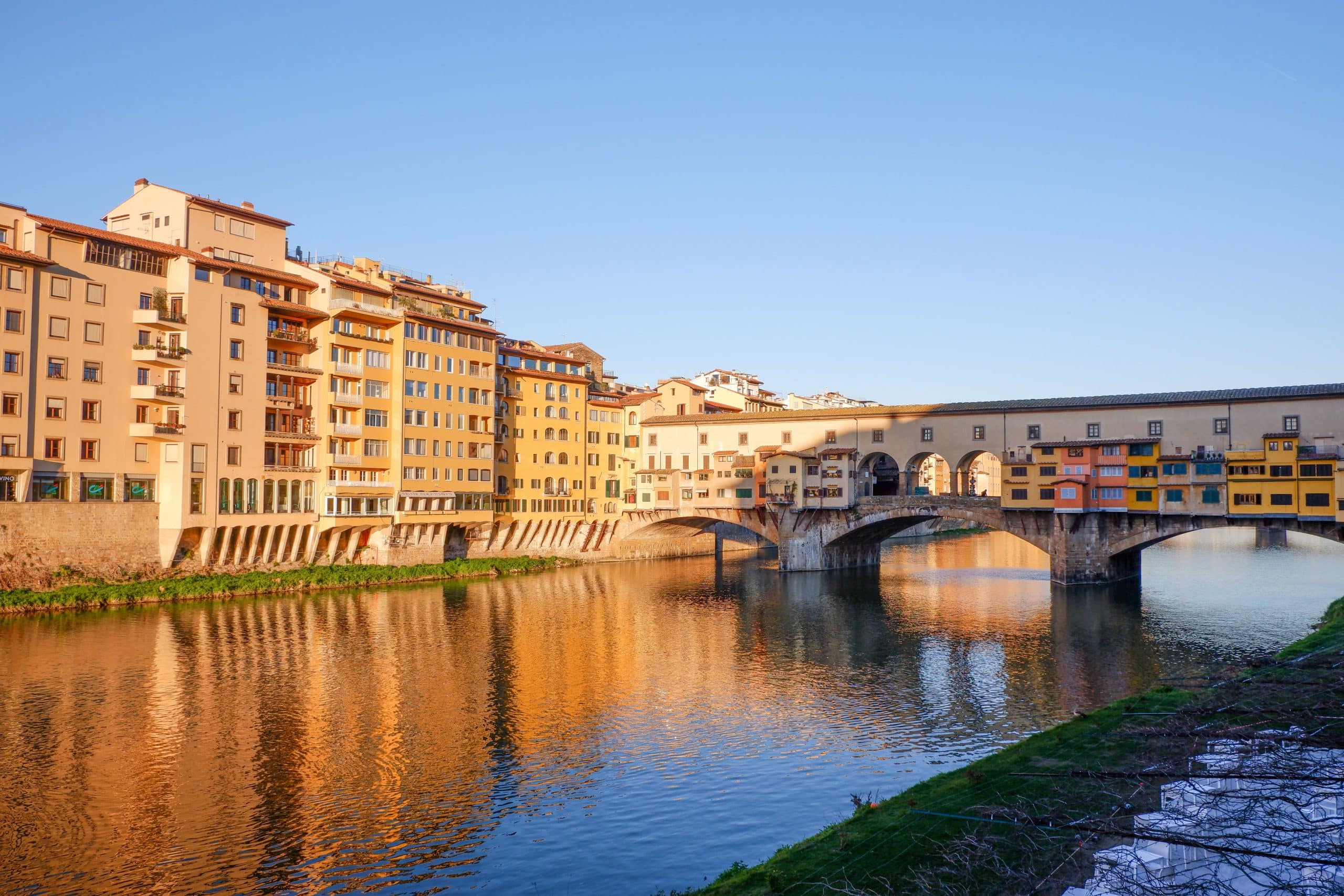
Doing an Erasmus in Florence means living inside the Renaissance. The Tuscan capital is a UNESCO-listed open-air museum where Brunelleschi’s dome, the Uffizi and the Ponte Vecchio are part of your daily commute. It’s compact, walkable, and packed with international students — especially those drawn to its world-class art, architecture, history and design programmes.
This guide covers everything you need for a great exchange in Florence: the universities, the best neighbourhoods, what it costs, how the academic year works, and where the Erasmus community comes together.
Browse student accommodation in Florence
Why choose Florence for your Erasmus?
Florence offers an experience unlike anywhere else: a small, beautiful, intensely walkable city that doubles as one of the world’s great cultural capitals. You can walk almost everywhere, the international student community is large and welcoming, and the city is a magnet for art, design, history and Italian-language students. Tuscany on your doorstep and excellent rail links make weekend travel easy.
The trade-offs are tied to its popularity: Florence is a major tourist destination, so the centre can be crowded and rents are high relative to the city’s size, with demand consistently outstripping supply. An early, well-planned housing search is essential.
Universities in Florence for Erasmus students
Università degli Studi di Firenze (UNIFI)
The main public university and one of Italy’s largest and oldest, UNIFI covers a full range of subjects across faculties spread through the city, with a strong Erasmus tradition and a growing set of English-taught options. The San Marco area is the historic university district, home to many faculty buildings, while science and some other faculties sit at the Novoli campus to the north-west.
Art, design and international institutions
Florence is a hub for specialist and international study. The prestigious European University Institute (EUI) runs postgraduate and doctoral research; IED Florence and the Accademia draw design and arts students; and numerous American and international study-abroad programmes (such as Florence University of the Arts) bring a large English-speaking student population.
Uniplaces insight: San Marco is UNIFI’s historic heart, but the Novoli campus sits north-west of the centre — and the many art and study-abroad institutions are scattered through the city. Confirm exactly where your faculty or programme is based before choosing a neighbourhood; in a city this compact, even a central room can be a long walk from the wrong campus.
Best neighbourhoods for Erasmus students in Florence
Florence’s student areas cluster in and around the historic centre.
San Marco is the university district, close to many UNIFI faculties. San Lorenzo, next door, is lively and central, anchored by the Mercato Centrale food market. Santa Croce and Sant’Ambrogio sit near the Arno and the universities, with a vibrant, foodie feel. Santa Maria Novella is central and well-connected near the main station. Oltrarno (including Santo Spirito and San Niccolò), “”beyond the Arno””, is the bohemian, authentic side — beautiful, social and slightly cheaper. Novoli, further out, offers larger, more modern and more affordable flats near the science campus.
Uniplaces insight: Florence’s rental market is one of the most competitive in Italy for its size, squeezed by both tourism and student demand — furnished, ready-to-move-in rooms go fast. Booking a verified room 1 to 2 months ahead (or earlier for September) secures a central spot before the rush, and avoids competing with short-term tourist lets.
Cost of living in Florence for students
Florence is on the pricier side for Italy, driven by tourism and limited central supply, though its small size keeps transport costs low. Most students spend between €800 and €1,300 a month, with rent the dominant cost.
As a rough monthly guide:
- Rent: a room in a shared flat typically runs €400–€600, higher in the historic centre, more affordable in Novoli and the outskirts.
- Utilities: around €50–€100 per person in a shared flat, with winter heating adding to costs.
- Groceries: around €200–€300, with the Mercato Centrale, Esselunga and local markets the budget options.
- Transport: the city is highly walkable; buses and the tram cover the rest affordably, with student passes.
- Eating out: aperitivo culture and Tuscan trattorias offer good value alongside the tourist-priced centre.
The academic year and key dates
UNIFI runs two semesters: the first typically from late September to January (with a winter exam session), the second from February to June, followed by exams. Art academies and international programmes may run on different calendars, so check your specific institution’s dates.
Welcome and orientation activities for exchange students take place before term, with ESN and student associations active throughout the semester.
Uniplaces insight: Because Florence’s housing competes directly with lucrative short-term tourist rentals, medium-term and temporary student contracts are common — and securing one early matters even more than in other Italian cities. Lock in your room before you arrive rather than searching against the tourist market on the ground.
Erasmus social life in Florence
Florence has a lively, very international student scene, fuelled by UNIFI, the art academies and a large study-abroad population. ESN and student organisations run trips, aperitivo nights and events, and the compact city makes meeting people easy.
Social life centres on aperitivo in Santo Spirito and Sant’Ambrogio, sunset at Piazzale Michelangelo, and the bars around Santa Croce and San Lorenzo. Beyond the art and museums, Tuscany is the real bonus — Siena, Pisa, the Chianti wine country and the coast are all easy day or weekend trips, and Florence’s rail links reach Rome, Bologna and beyond fast.
Practical admin for your exchange
Sort these early:
- EHIC / health cover: EU students should bring a European Health Insurance Card; non-EU students usually need private insurance, often required for the visa.
- Visa and permesso di soggiorno: non-EU students staying over 90 days need a student visa and must apply for a permesso di soggiorno after arrival.
- Codice fiscale: the Italian tax code is needed to sign a lease — get it early.
- Bank and SIM: an EU-friendly bank account and a local SIM make daily life easier.
- Transport: sort a student bus/tram pass, though you’ll walk most places in this compact city.
Pros and cons of Erasmus in Florence
The upsides: an unmatched setting for art, architecture and history; a compact, walkable city; a large international student community; superb food and Tuscan day trips; and great rail connections.
The trade-offs: high rents for the city’s size and a market squeezed by tourism; a centre crowded with tourists in peak season; fewer English-taught degree programmes than Milan or Bologna outside the art and study-abroad institutions; and hot, busy summers.
Frequently asked questions
How much money do I need per month for Erasmus in Florence?
Most students budget between €800 and €1,300 a month, with rent the biggest cost. The compact city keeps transport cheap, but central rents are high — sharing a flat helps a lot.
When should I start looking for accommodation?
Early — at least 1 to 2 months ahead, and sooner for a September start. Florence’s market competes with tourist rentals and demand outstrips supply, so book a verified room before you arrive.
Do I need to speak Italian?
The art academies and international programmes run largely in English, and the study-abroad community is big, so you’ll manage. UNIFI degree courses are more often in Italian, and some Italian helps with admin and daily life.
Which neighbourhood is best for Erasmus students?
San Marco and San Lorenzo for proximity to UNIFI; Santa Croce and Oltrarno (Santo Spirito) for atmosphere; Novoli for cheaper, more modern flats near the science campus. Match your area to your faculty.
Is Florence too touristy for student life?
The centre is busy with tourists, especially in summer, but the large student and academic community gives the city a genuine student life — particularly in areas like Oltrarno and around the universities, away from the main sights.
Still planning your move?
Find your Erasmus home in Florence →