
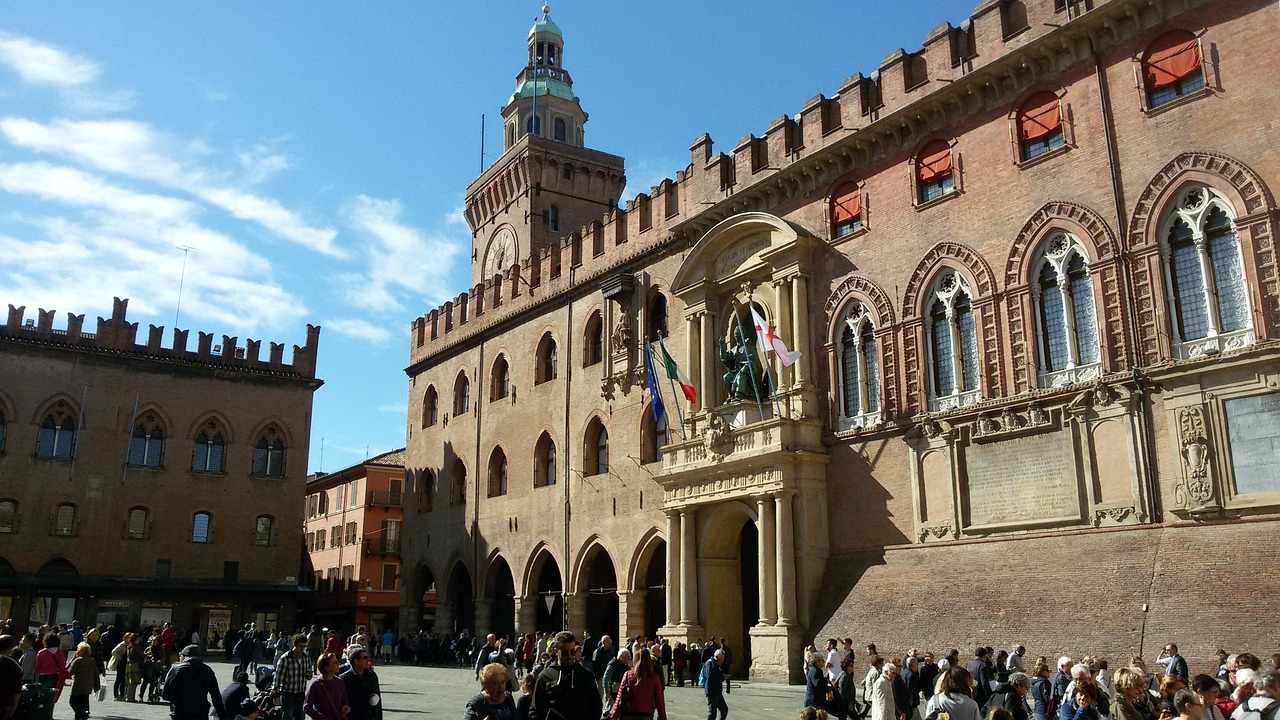
Bologna is the student city other student cities are measured against. Home to the oldest university in the Western world and a population that’s roughly a third students, it pulses with youthful energy — medieval porticoes filled with bikes, piazzas packed every evening, and some of the best food in Italy on every corner. For Erasmus students, it offers a tight-knit international community in a compact, affordable, endlessly social city.
This guide covers everything you need for a great exchange in Bologna: the university, the best neighbourhoods, what it costs, how the academic year works, and where the Erasmus community comes together.
Browse student accommodation in Bologna
Why choose Bologna for your Erasmus?
Bologna packs an enormous amount into a human-scale city. It’s compact enough to cross by bike, has 40km of UNESCO-listed porticoes that let you walk across town in the rain without getting wet, and is consistently rated one of Italy’s most progressive and welcoming cities. Rents are lower than Rome or Milan, the food scene is legendary (this is the home of tagliatelle al ragù), and the central location with a major rail hub makes the rest of Italy and Europe easy to reach.
The student atmosphere is the real draw: with one of the largest Erasmus communities in Italy and a city built around its university, integrating into student life is effortless. The main catch is a competitive housing market driven by that same high demand.
The university in Bologna for Erasmus students
Università di Bologna (UNIBO)
Founded in 1088, UNIBO is the oldest university in continuous operation in the Western world and remains one of Italy’s most prestigious, with a strong academic reputation across many fields. It hosts one of the largest Erasmus intakes in Italy and offers a growing range of English-taught programmes. Most faculties are spread through the historic centre, anchored by the Zona Universitaria around Via Zamboni and Piazza Verdi. UNIBO also has campuses in the wider Romagna region (Forlì, Cesena, Ravenna, Rimini), where the cost of living can be even lower.
Uniplaces insight: UNIBO’s faculties are woven through the historic centre rather than on a single campus, which is part of why the whole city feels like a campus. The Zona Universitaria around Via Zamboni is the academic heart — living in or near it puts you within walking (or cycling) distance of most lectures.
Best neighbourhoods for Erasmus students in Bologna
Bologna’s areas range from the buzzing university district to quieter, cheaper outskirts.
The Zona Universitaria (around Via Zamboni and Piazza Verdi) is the heart of student life — the most international area, full of independent cafés, bookshops and bars, right by the faculties. The historic centre / Quadrilatero puts you in the beautiful medieval core, ultra-convenient but with a student/tourist price premium. Bolognina is an up-and-coming, increasingly popular area north of the centre with good value. San Donato and Massarenti are budget-friendly with easy access to campus. San Ruffillo and Toscana, near leafy parks, are among the cheapest areas to rent.
Uniplaces insight: Bologna’s market is competitive because students make up such a large share of the city — start your search early. Rooms in the centre carry a premium; areas like San Donato, Bolognina and Massarenti offer better value with easy campus access. Booking a verified room before you arrive avoids the September scramble.
Cost of living in Bologna for students
Bologna is more affordable than Rome or Milan, though demand keeps rents competitive. Most students spend around €900–€1,000 a month all in, with rent the biggest factor.
As a rough monthly guide:
- Rent: a room in a shared flat typically runs €400–€600, with budget options from around €300 in cheaper areas; university halls are often €350–€500.
- Utilities: add utilities on top if not included, usually split with flatmates.
- Groceries: around €200–€300, with local markets and supermarkets keeping costs down.
- Transport: the city is small and bike-friendly — many students buy a second-hand bike — with affordable bus passes too.
- Eating out: Bologna’s food is a highlight; trattorias and student spots offer great value, plus the ritual of an Aperol spritz in Piazza Verdi.
The academic year and key dates
UNIBO runs two semesters: the first typically from late September to December/January (with a winter exam session), the second from February to June, followed by exams. Exact dates vary by faculty, so check UNIBO’s official calendar and its incoming-mobility pages.
The university and student associations run welcome and orientation activities for exchange students before term, and ESN Bologna is highly active from day one.
Uniplaces insight: Note that you’ll need to register your lease in Italy, and UNIBO provides support for this. Sorting your accommodation — and an Italian codice fiscale — before you arrive means you can register properly and settle in quickly rather than chasing paperwork mid-semester.
Erasmus social life in Bologna
Few cities do student social life like Bologna. With students making up about a third of the population, the whole city is geared towards young people. ESN Bologna runs trips, parties and language exchanges, and the international student community is large and easy to plug into.
The social heart is Piazza Verdi and the Zona Universitaria, where students gather every evening, but the whole compact centre buzzes — aperitivo culture, the Quadrilatero food market, the porticoes and the Two Towers. Bologna’s central rail position makes weekend trips to Florence, Venice, Milan and beyond quick and cheap.
Practical admin for your exchange
Sort these early:
- EHIC / health cover: EU students should bring a European Health Insurance Card; non-EU students usually need private insurance, often required for the visa.
- Visa and permesso di soggiorno: non-EU students staying over 90 days need a student visa and must apply for a permesso di soggiorno after arrival.
- Codice fiscale: the Italian tax code is needed to sign a lease — get it early.
- Lease registration: Italian leases must be registered; UNIBO offers a support service for this.
- Bank, SIM and bike: an EU-friendly bank account, a local SIM and a second-hand bike make daily life much easier.
Pros and cons of Erasmus in Bologna
The upsides: one of the largest and most vibrant student communities in Italy, the oldest university in the Western world, a compact and bike-friendly city, lower rents than Rome or Milan, incredible food, and superb rail connections.
The trade-offs: a competitive housing market driven by huge student demand, a centre that gets a student/tourist price premium, and hot, humid summers typical of the Po Valley.
Frequently asked questions
How much money do I need per month for Erasmus in Bologna?
Most students budget around €900–€1,000 a month all in, with rent the biggest cost. It’s more affordable than Rome or Milan, and sharing a flat keeps costs down.
When should I start looking for accommodation?
As early as possible. Because students make up such a large share of the city, demand is high and good rooms go fast before each semester. Booking a verified room before you arrive is the safest approach.
Do I need to speak Italian?
UNIBO offers a growing range of English-taught programmes and the large international community means English works socially. Italian still helps with admin and daily life, so some basics are worth learning.
Which neighbourhood is best for Erasmus students?
The Zona Universitaria around Via Zamboni is the student heart; the historic centre is convenient but pricier; San Donato, Bolognina and Massarenti offer better value with good campus access. The compact city means most areas are walkable or a short cycle.
Is Bologna really that good for students?
It’s widely considered one of the best student cities in Europe — a third of residents are students, the university is the oldest in the Western world, and the food and social scene are exceptional. For an immersive student experience, it’s hard to beat.
Still planning your move?
Find your Erasmus home in Bologna →