
Introduction
Exploring Portugal’s food scene is like going on a delicious adventure in a country famous for its rich culture and diverse landscapes. Portuguese cuisine is a mix of Atlantic and Mediterranean flavors, making it a one-of-a-kind culinary experience.
Traditional dishes are key to understanding the essence of Portuguese culture. For a broader exploration of what defines Portuguese cooking, Portugal’s guide to authentic culinary treasures gives the full regional and historical breakdown. By delving into these specialties, you connect with the country’s history and present. Every recipe holds a tale of local customs, family gatherings, and regional pride.
Geography and history have had a significant impact on Portuguese cuisine. With its long coastline, Portugal has access to a wide variety of seafood, while its fertile land provides an abundance of fresh fruits and vegetables. Important historical events like the Age of Exploration brought new ingredients from Africa, Brazil, and the Spice Route, further enriching the country’s culinary heritage.
When you discover Portugal’s traditional dishes, you’re also embracing a heritage that values simplicity and bold flavors. This guide will introduce you to some of these hidden gems in Portuguese cuisine, inviting you to savor each bite and uncover the stories behind them.
The Essence of Portuguese Cuisine
Portugal’s cuisine is a celebration of simplicity and flavor, featuring dishes that emphasize the natural taste of fresh ingredients. Foods from Portugal often highlight the bounty of the land and sea, using minimal seasoning to let the core components shine.
Unique Characteristics
Portuguese cuisine stands out for its:
- Simplicity: Recipes often use few ingredients but focus on quality and technique.
- Flavor: A balance of sweet, salty, sour, and spicy elements creates complex yet approachable dishes.
- Heritage: Many Portugal dishes have been passed down through generations, maintaining traditional cooking methods.
Fresh Ingredients and Local Produce
The role of fresh ingredients cannot be overstated in Portuguese cooking. Farmers’ markets brim with:
- Seasonal Vegetables: Tomatoes, peppers, onions, and leafy greens.
- Local Fruits: Oranges from Algarve, cherries from Fundão.
- Fresh Seafood: Daily catches include sardines, clams, and octopus.
- Meats and Dairy: Grass-fed beef, pork from Alentejo, artisanal cheeses like Queijo da Serra.
Regional Diversity
Portugal meals reflect the country’s diverse regions:
- Northern Portugal: Rich stews like caldo verde and hearty meats.
- Central Portugal: Baked goods such as pastel de nata and rice dishes.
- Southern Portugal (Alentejo): Pork-based dishes with coriander and garlic.
- Coastal Areas: Seafood specialties like arroz de marisco (seafood rice) and sardinhas assadas (grilled sardines).
Each region offers a unique perspective on Portuguese culinary traditions, making every meal an exploration of local culture.
Influences on Portuguese Culinary Traditions
Portuguese cuisine showcases a rich tapestry of flavors, shaped by its history of exploration and trade. When Portuguese explorers set sail in the 15th and 16th centuries, they brought back a variety of spices, ingredients, and culinary techniques that continue to define the nation’s food culture.
Historical Influences
1. Exploration and Trade
The Age of Discovery opened Portugal to a world of new tastes. Cinnamon, cloves, and nutmeg from the Spice Route became staples in Portuguese cooking. Desserts such as arroz doce (rice pudding) often feature these spices.
2. Africa
From Africa, the Portuguese adopted ingredients like okra and peanuts. Piri-piri peppers also made their way into Portuguese cuisine during this time, adding heat to many dishes.
3. Brazil
The influence of Brazil introduced cassava and sugarcane. These ingredients played a role in creating traditional sweets such as bolo de rolo (a rolled sponge cake).
Incorporation of Ingredients
The blend of Atlantic and Mediterranean flavors in Portugal’s cuisine results from these diverse influences. Ingredients like olive oil, garlic, and cilantro are frequently used alongside exotic spices to create unique dishes.
1. Spice Route
The Spice Route enriched Portuguese cuisine with flavors such as saffron, which can be found in dishes like arroz de marisco (seafood rice).
2. Local Produce
Fresh seafood from the Atlantic coast harmonizes with imported spices, creating signature dishes like caldeirada (fish stew).
Portuguese culinary traditions reflect a melting pot of global influences, making each dish an adventure through history.
Iconic Dishes of Portugal
Bacalhau – The National Dish
Bacalhau, or salted cod, is the cornerstone of traditional Portuguese food. This versatile fish can be prepared in numerous ways:
- Baked: Bacalhau à Brás is a cherished dish where shredded cod is mixed with onions, eggs, and thinly sliced potatoes. Another favorite, Bacalhau com Natas, features baked cod in a creamy sauce.
- Grilled: For a simpler preparation, Bacalhau Assado involves marinating the cod in olive oil and garlic before grilling it to perfection.
- Casseroles: Bacalhau à Gomes de Sá combines layers of flaked cod with potatoes, onions, and olives in a hearty casserole.
These methods highlight the adaptability of bacalhau and its ability to absorb various flavors.
The cultural significance of bacalhau cannot be overstated. It is said there are more than 365 ways to prepare this fish—one for each day of the year. Annually, Portugal imports around 25,000 tons of bacalhau from Norway. This tradition began during the Age of Discoveries when Portuguese sailors needed a reliable source of protein for their long voyages.
In Portuguese households, bacalhau often appears during festive occasions like Christmas Eve dinners. This tradition underscores the fish’s role not just as a culinary staple but as an integral part of Portuguese heritage.
Sweet Treats – Pastel de Nata
Pastel de nata, a creamy custard tart, originated from the Jerónimos Monastery in Lisbon. Monks created this delightful pastry to use up leftover egg yolks, as they used egg whites for starching clothes. The recipe was later sold to the Fábrica de Pastéis de Belém, where it became incredibly popular.
These iconic tarts are loved all over Portugal. Each region has its own slight variations, but the basic idea remains the same—a crispy, flaky crust filled with smooth, sweet custard. Some bakeries add hints of cinnamon or lemon zest for a unique twist.
Key Points:
- Origin: Jerónimos Monastery in Lisbon
- Popularity: Nationwide, with regional variations
- Ingredients: Flaky pastry crust, creamy custard filling
Indulging in a pastel de nata is a must when exploring traditional Portuguese food.
Seafood Delights in Portuguese Cuisine
Portugal’s extensive coastline makes seafood an integral part of its culinary traditions. Fresh fish and shellfish feature prominently in many dishes, reflecting the country’s deep connection to the sea.
Signature Seafood Dishes
Arroz de Marisco
A beloved Portuguese seafood dish, arroz de marisco is a flavorful rice dish brimming with various types of seafood. Typically, it includes:
- Shrimp
- Clams
- Mussels
- Squid
The preparation involves sautéing garlic and onions in olive oil, adding fresh tomatoes and white wine, and simmering the seafood until tender. The result is a rich, savory dish often garnished with cilantro.
Ameijoas à Bulhão Pato
Another standout is ameijoas à Bulhão Pato, featuring clams cooked in olive oil with garlic, cilantro, and lemon juice. This simple yet fragrant dish exemplifies the use of fresh ingredients to create robust flavors.
Sardinhas Assadas
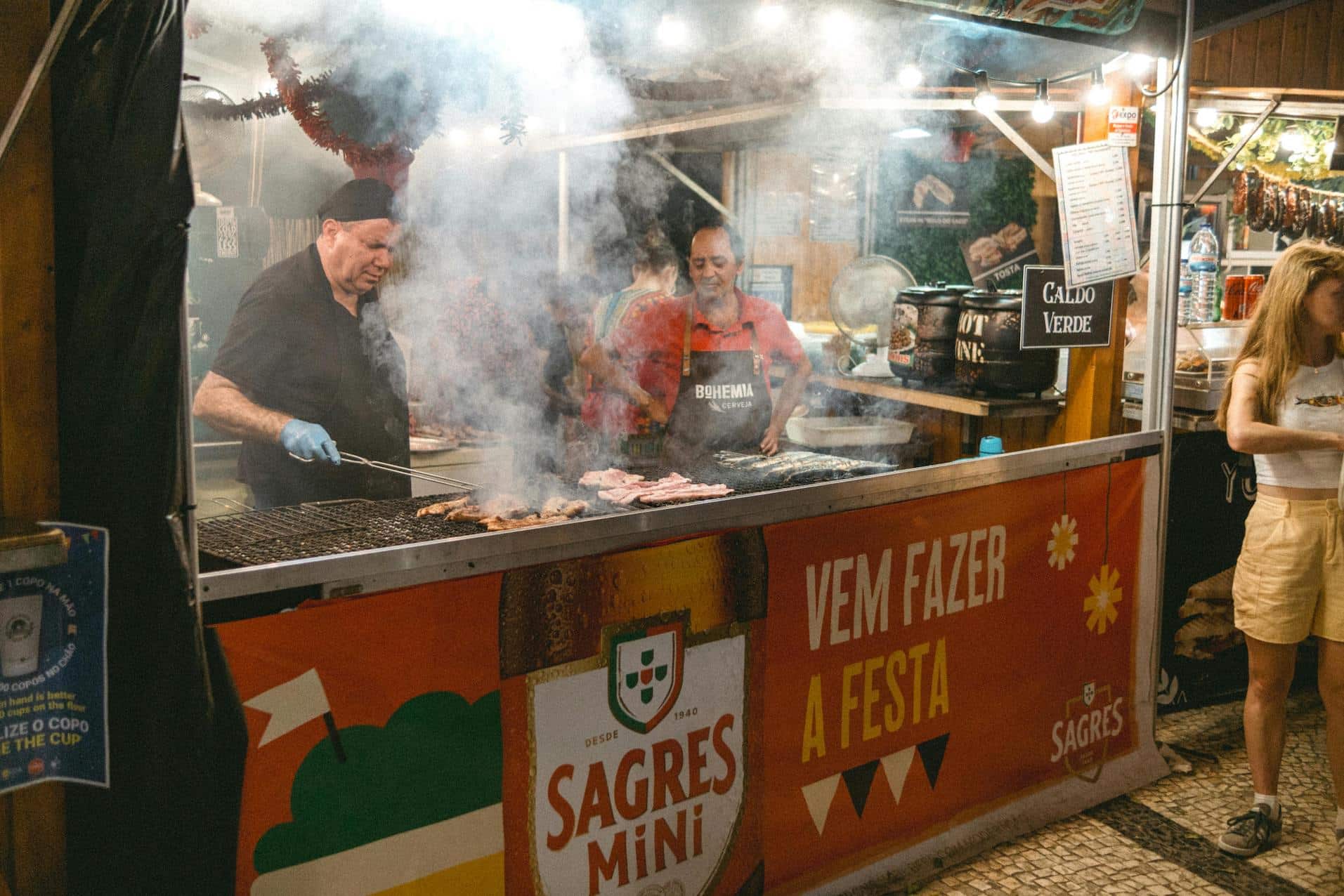
Grilled sardines (sardinhas assadas) are particularly popular during food and wine festivals like Lisbon’s Santo António celebrations. Sardines are seasoned with coarse salt and grilled over charcoal, creating a smoky flavor that pairs perfectly with a glass of Portuguese wine.
Hearty Meat Dishes
Traditional meat dishes in Portugal offer a rich and satisfying experience. The cuisine features robust flavors and slow-cooked delights, often highlighting the country’s agricultural bounty.
Regional Specialties
Each region boasts unique meat dishes that reflect local traditions and ingredients.
Alentejo Pork Dishes
The Alentejo region is renowned for its slow-cooked pork meals. One of the standout dishes is Porco à Alentejana, which combines tender marinated pork with clams, creating a savory surf-and-turf delight. The pork is typically marinated in a mixture of garlic, paprika, and white wine before being slow-cooked to perfection.
Francesinha Sandwich
In Porto, the famous francesinha sandwich takes center stage. This hearty sandwich includes layers of different meats such as ham, linguiça (smoked sausage), steak or roast meat, all topped with melted cheese and drenched in a spicy tomato-beer sauce. Often garnished with a fried egg on top and served with fries, it’s a beloved dish among locals and visitors alike.
These regional specialties showcase the depth and diversity of Portugal’s meat-based cuisine. Whether you’re savoring the rustic flavors of Alentejo pork or indulging in the decadent francesinha sandwich, there’s a hearty meal waiting for you in every corner of Portugal.
Soups as a Staple in Portuguese Meals
Soups hold a special place in Portuguese cuisine. They are not just starters but often serve as hearty meals, especially during colder months. One of the most beloved traditional soups is caldo verde. This comforting dish features kale, potatoes, and chorizo. The simplicity of its ingredients belies the rich and satisfying flavor that has made it a staple in Portuguese households.
Unique Sausages and Regional Variations
Portugal’s culinary landscape also includes a variety of unique sausages, each adding distinct flavors to regional dishes. One standout is the alheira sausage. Unlike typical sausages made primarily from meat, alheira combines bread with meats such as chicken or pork. This blend creates a unique texture and taste, reflecting Portugal’s ingenuity in using available resources.
For a focused shortlist of the dishes most worth seeking out, 10 must-try authentic Portuguese dishes distils the essentials before you sit down at any Portuguese table.
Sausage variations exist across different regions:
- Trás-os-Montes: Known for its spicy chouriço.
- Alentejo: Famous for its black pork sausages.
- Beira Interior: Offers farinheira, a flour-based sausage with a smoky flavor.
Conclusion
Exploring Portugal’s culinary secrets offers a unique way to connect with its rich cultural heritage. Each traditional dish tells a story of the country’s history, geography, and diverse influences.
When visiting Portugal, dive into local gastronomy. Savor dishes like bacalhau, pastel de nata, seafood delights, hearty meats, and flavorful soups.
The Portuguese culinary landscape is a blend of simplicity and profound flavors. From rustic tavern fare to gourmet dining, every meal reflects the country’s vibrant history and tradition. Food and social life are deeply intertwined in Portugal — navigating Portuguese social customs explains mealtime etiquette, dining norms, and the social rituals that surround the table.