Ghent Belfry, world heritage
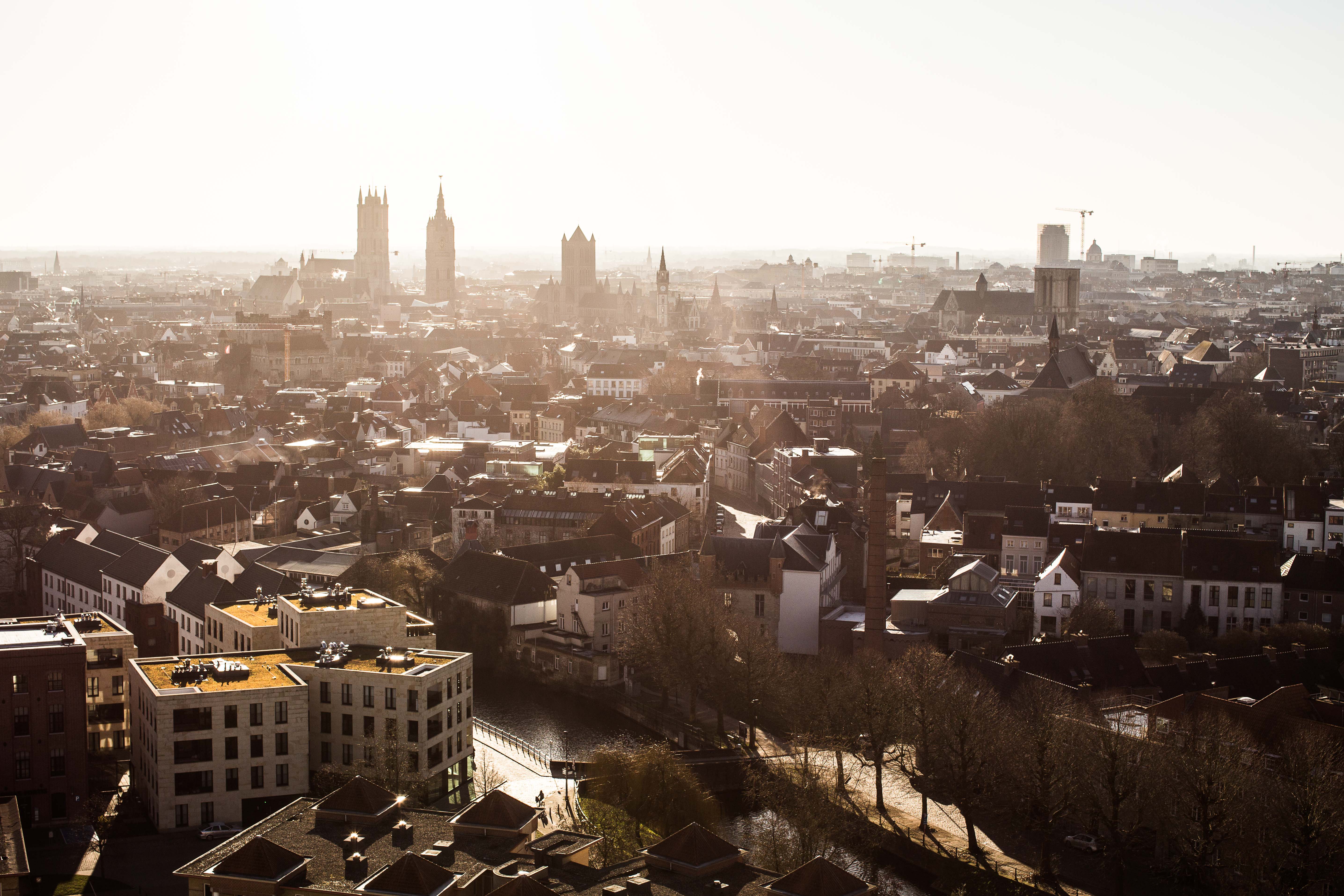
Look up at the magical city skyline for a moment during your weekend trip in Ghent: you can’t miss it. The Belfry is the middle tower in the famous row of three, between St Bavo’s Cathedral and St Nicholas’ Church. A fiery dragon, the proud symbol and mascot of Ghent, guards the historic heart of the city.
The Ghent Belfry symbolises the city’s prosperity and independence. The Cloth Hall, built onto the Belfry, was completed in 1907. The flamboyant Brabant Gothic style of the Cloth Hall is an ode to the industry to which Ghent owes so much. On the corner of the Cloth Hall is an old jailer’s house.
The Ghent Belfry, a recognised UNESCO World Heritage, is well worth a visit. In 1402, it was the place where city privileges were kept: in a chest, locked up in the Belfry safe. The dragon, which has been up on the tower since 1377, kept an eye on the city as well as being the symbolic guardian of the belfry. The Belfry also proudly carried the alarm bell, the ‘Great Triumphant’. Today you will find this bell, nicknamed ‘Roland’ by the people of Ghent, not far from the Belfort on Emile Braunplein.
Until 1442, St Nicholas’ Church was the main watchtower. In 1442, the watchmen in the tower moved across to the newly completed Belfry. Along with the bell ringers, these watchmen, or the corps of ‘men who guard the city’, served until 1869. Fire was a particular danger in Ghent.
The Belfry tower is an absolute must-see! Climb the stairs, listen to the chiming sound of the carillon and enjoy the view of the vibrant city of Ghent. There is a lift from the first floor. The stunning view over Ghent is bound to enchant you. However, the Belfry is not accessible to visitors with reduced mobility.
The Mammelokker, a legend behind bars
In 1741, a building was erected between the Belfry and the Cloth Hall, which served as the entrance to the city jail. You will see a relief sculpture above the entrance. The sculpture tells an old Roman legend of a man, Cimon, who was sentenced to death by starvation. He survived his sentence because his daughter visited every day and breastfed him. ‘Mamme’ means ‘breast’ and ‘lokken’ means ‘suck’ in an old Ghent dialect.
The Belfort, great fun for little dragons
Ghent wouldn’t be Ghent without children and young people, so Ghent Belfry also has plenty to offer little dragons. Here you will find activities for kids aged 6 to 18 years old. Kids up to the age of 100 are more than welcome here as well ;-).
Child-friendly Ghent: have fun on your weekend trip with the whole family. Do you know about the city game with Fosfor the dragon as well?
St Peter’s Abbey, peaceful vineyard
This Benedictine abbey was founded in the 7th century by St Amand, who christened the very city of Ghent itself. In the 14th and 15th centuries, it grew into nothing short of an abbey village, with farms, gardens, homes and estates. The abbey owed its prosperity to the privileges it had gained and the taxes it was allowed to impose on its estates. It owned land all the way to the port in Ghent.
The virtual monk ‘Alison’ will give you a virtual tour of the abbey. ‘Jean-François Alison’ is your mystery movie guide during your visit to St Peter’s Abbey. In seventeen episodes, he takes you on an exciting and mysterious journey in search of his friend’s murderer. He takes you to places you would never otherwise go. The mediaeval dining hall, the majestic abbey church, a beautiful garden and endless attics: you will stumble from one surprise to the next, between heaven and earth. It is really thrilling, and suitable for children as well. Why not take a virtual look at St Peter’s Abbey now?
The garden of this abbey is a real hotspot in Ghent that is particularly popular with the city’s students who come here to chill out or revise in the sunshine. A must-see during your city break. The magnificent garden with its vineyard and ruin is an oasis of greenery in the city. Prestigious exhibitions with an international allure are held every year in St Peter’s Abbey. The dining wing of St Peter’s Abbey is authentic, dating from the Middle Ages. Visit the ground floor of St Peter’s Abbey for free (cloisters and quadrangle, as well as the permanent exhibition Between Heaven & Earth and the abbey garden).
The Castle of the Counts
A weekend trip to Ghent is simply not complete without a visit to the mysterious ‘Castle of the Counts’. This important sight in Ghent is a castle with a very turbulent past, closely intertwined with the complex — often stormy — political and social history of the city. It is the only remaining mediaeval castle with a moat and largely intact defence system in Flanders. Your visit to the Castle of the Counts will give you a complete picture of heraldic culture in the 12th century. The gatehouse, ramparts, keep, count’s residence and stables are open to visitors.
Be sure to go up the long spiral staircase to the museum of torture devices on the top floor of the Castle of the Counts. Here, you will find a unique collection of instruments for torture and coercion, as well as a collection of weapons. The Castle of the Counts also hosts all kinds of cultural activities, events and activities, for example during the Ghent Festivities. It is also a popular place to get married for Ghent’s locals.
Let’s not forget the time the Castle of the Counts was occupied by protesting students in 1949! Explore the castle during your weekend trip in Ghent and find out all about the ‘Battle of the Castle of the Counts’.
The keep, symbol of the Counts’ power
Go back in time inside this majestic fortress. Its history goes back to the time of the Roman occupation, when there was already a settlement on a sand bank by the River Lys. After a brief period of Viking plundering, the Counts of Flanders converted the earlier wooden constructions into a keep (living quarters) in the Middle Ages, with ramparts built entirely of stone, replete with 24 towers. The imposing building with its military architecture was a symbol of the Counts’ power in the turbulent city of Ghent.
Count Philip and his castle: dominating the city
Count Philip of Alsace wanted everyone to know that he was the boss. A Latin inscription above the entrance states that Count Philip (1168-1191) built the castle in 1180. The sense of wealth and power that his castle gave him is brought to life when you stand between the battlements at the top of the keep and gaze out over the vibrant city of Ghent.
Industrial revolution banishes knights from Ghent
You are bound to be fascinated by the twists and turns in the story of the Castle of the Counts during your weekend getaway. In the late 18th century, the Castle of the Counts was sold to private owners who later converted it into a factory complex. In 1807, the fortress in the heart of Ghent housed a cotton mill, and its outbuildings served as primitive dwellings for about fifty families of workers. When the mill and its workers left, the Castle of the Counts was in a state of complete disrepair, ready for demolition.
By that point, the Castle of the Counts was a symbol of abuse of power, feudal repression, horrific torture methods and a cruel inquisition as far as the people of Ghent were concerned. Restoration gave the Castle of the Counts a new meaning and world fame as Ghent’s most important tourist sight, partly due to the World Expo 1913, which took place in Ghent.
Do you want to dig deep into the history of Ghent? This is where you need to be. Ghent, full of charming history and modern vibrancy.