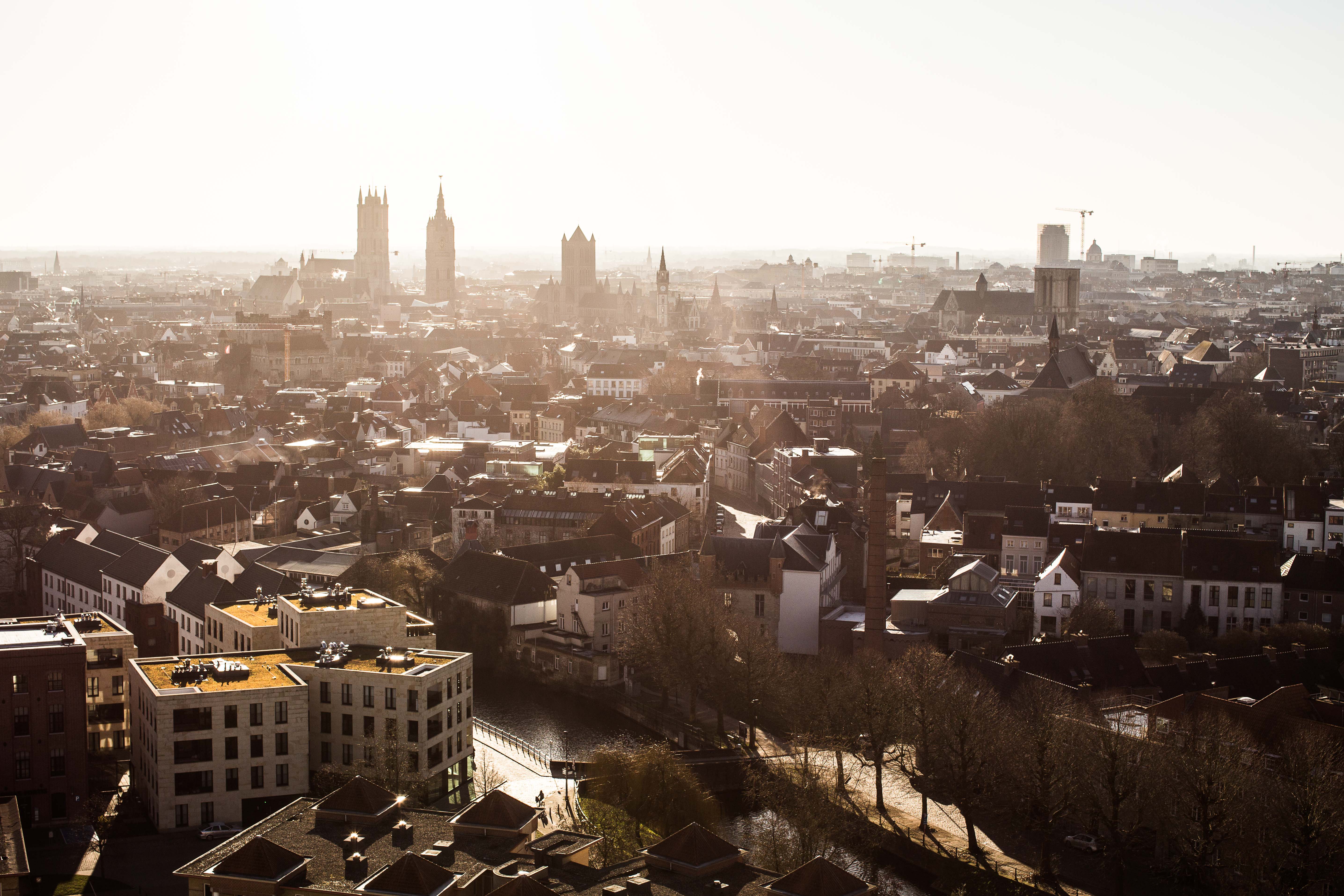
Ghent City Museum (STAM)
The STAM is the ideal place to start your cultural holiday in Ghent, an unmistakeably contemporary building against a historic backdrop. Ghent is a city of every era, and the same applies to the modern Ghent City Museum: the 14th-century abbey, 17th-century convent and new 21st-century building all form part of the STAM.
The STAM tells the story of Ghent from the Middle Ages to the present day, with imaginative collections and interactive multimedia. The past, present and future of the city are presented in a clear and interesting way: from mediaeval metropolis to city of knowledge and culture.
The eye-catcher at Ghent City Museum, the STAM, is a gigantic aerial photograph of Ghent (measuring 300 m2!) that you are allowed to walk all over. Use the multimedia app to see Ghent in detail in four different centuries. ‘Views of Ghent’ shows a view of the city in 1534, maps from 1614 and 1912 and a contemporary aerial photograph.
City pavilion
The multifunctional and open city pavilion is an architectural masterpiece designed by the architects Robbrecht & Daem / Marie-José Van Hee. The roof structure and the use of glass, wood and concrete are very striking. This location can host concerts, dance performances and markets.
Discover the ‘grand café’ hidden under the city pavilion: the semi-underground ‘Belfort Stadscafé en Stadsrestaurant’ is already a bubbly establishment which can cater for 300 people. Head over there for a drink, a daily special or a selection of the à la carte menu.
The city park on the lower level, The Green, is surrounded by a stone wall. This is the place to be if you’re looking to relax, read or simply hang around. Stairs and ramps connect the park with the street levels higher up. Diagonal walking paths connect the Donkersteeg with the Mageleinstraat and Cataloniëstraat, inviting you to shop and enjoy a stroll.
Works of art
The existing art elements – the Minne sculptures and the Mathildis clock – were given a new place in the design.
Spring of the Bereaved
The naked youngsters look at their reflection in the water of the fountain, just like Narcissus, the Greek mythological figure did, out of narcissism. When the statue was placed here in 1937, the bourgeoisie thought it was immoral. Today no one is shocked by these naked boys. George Minne, the artist, sought inspiration in the statues on the Gothic buildings.
The Roeland Bell
The song “Klokke Roeland” (Roeland Bell) is probably the most famous folk song in Ghent. This bell is known as ‘The Triumphant’ and as ‘Roeland’, after the first large bell at the Belfry. The bell cracked in 1914 and was removed from the Belfry and restored. Today it is displayed on a specially designed base next to St Nicholas’ Church. Are you interested in witnessing the Ghent carillon for yourself? Then you must visit the Belfry.
De Maagd
The Belgian artist Michaël Borremans donated his fresco, “De Maagd” (The Virgin), to the city. It portrays a black-haired girl against a dark background. Except for a white collar, the girl is dressed entirely in black. Two crystal-clear rays of light emanate from her eyes. You can find the painting on the bell cage above the door of the lift. The artist’s signature at the back of the work, in the bell cage.
Patershol, culinary heart of Ghent
This particularly beautiful corner of Ghent is a city within the city. Forget where you are for a moment and travel back in time to the Middle Ages. Have fun discovering centuries of history in this gorgeous part of town! Breathe in the nostalgia of old customs. Enjoy art and architecture. You will love the picturesque streets full of cosy restaurants, down-to-earth pubs and trendy bars.
Ghent is heaven for foodies. But the Patershol is definitely at the top of everyone’s menu. Eateries are almost shoulder to shoulder in these tiny cobbled streets. Take a culinary trip around the world from Japanese and Indonesian food, past Turkish, Italian and Spanish restaurants to traditional Flemish cuisine. Pick your style, whether it’s modern, romantic, a bit eccentric or exclusive. You certainly won’t be leaving with an empty stomach.
Real people live their lives in the shadow of the Castle of the Counts. Residents here go about their daily business. They welcome neighbours through their doors. Children play in the street. The Patershol is more than a tourist hotspot. Above all, it is a place where people live. There is a festival committee that honours local traditions. All of this gives the mediaeval streets a unique historic value. Wander down the narrow alleyways and experience the real soul of the Patershol.