The Mystic Lamb: supreme divine art
The Mystic Lamb, or ‘The Adoration of the Mystic Lamb’ by the Van Eyck brothers, completed in 1432, is recognised worldwide as a great work of art, and one of the most influential paintings ever made. It is an absolute must-see on your weekend break to Ghent. A total of 18 panels form a magical evocation of scenes from the Bible, as well as a portrait of the church warden, Joos Vijd, who commissioned the altarpiece, and his wife Elisabeth Borluut.
“The Adoration of the Mystic Lamb is probably the most influential painting ever made, and it is also the most often stolen work of art in history!”
Noah Charney
The monumental Mystic Lamb was painted on oak panels covered in thin layers of a mixture of chalk and animal glue. The figures were applied in several layers of oil paint. The combination of the painstaking work and transparent paint creates an extra dimension. Discover it for yourself as you stand in front of this masterpiece. You will see that an inner glow seems to radiate from the painting: the light of the divine.
Hubert van Eyck painted part of the Ghent Altarpiece that includes the Mystic Lamb, but was never able to finish it. His younger brother Jan, an absolute master of the art of painting, is said to have finished this masterpiece a few years after Hubert’s death.
On the morning of 11 April 1934, Ghent woke up to news of a disaster. Two panels of the Ghent Altarpiece, ‘The Just Judges’ and ‘John the Baptist’ had been stolen from St Bavo’s Cathedral! This daring theft has grown to become one of the most fascinating art robberies of the 20th century. It remains unsolved.
Later the ‘John the Baptist’ panel was returned anonymously, but ‘The Just Judges’ is still lost without trace. Today you can find the Mystic Lamb where it belongs: in St Bavo’s Cathedral. Admittedly there is still a reproduction in the place of the stolen panel, ‘The Just Judges’. Whether or not the missing panel is ever found, this theft has given rise to all sorts of exciting stories and mysterious conspiracy theories.
Head to Ghent city museum, STAM, for a spot of detective work to track down the world-famous missing panel, ‘The Just Judges’.
The Mystic Lamb: devoted restoration
This world-famous masterpiece by the Van Eyck Brothers in Ghent has been restored many times in the past. It has been undergoing thorough restoration and conservation work since 2012. During its turbulent history, the Mystic Lamb has survived transportation, changes in temperature and humidity, horrifying attacks with a saw and fire damage. Contemplate the intensive renovation work on this religious masterpiece right before your eyes in the MSK. Stand behind bulletproof glass to watch 11 international restorers removing layers of varnish and later additions and touching up blemishes with paintbrushes. Unique and unbelievably fascinating! Does The Mystic Lamb make you want more? You’re in luck, because once a month the restoration team gives a talk on the restoration of this masterpiece.
Adore the Lamb
Here’s a fascinating fact: The Mystic Lamb was rescued in 1945 by the famous ‘Monuments Men’. The Mystic Lamb was welcomed home like a king by the ecstatic people of Ghent, who lined the streets in a respectful guard of honour. There is a film of the amazing story of the Monuments Men, American art commandos who brought confiscated art back to where it belonged. The film, ‘The Monuments Men’, begins in St Bavo’s Cathedral in Ghent. The people of Ghent adore the Mystic Lamb, and rightfully so, but they also have a sense of humour. You can see proof of this in this spoof video about the Mystic Lamb.
Heavenly graffiti in Ghent
Discover the graffiti version of the Mystic Lamb in Ghent during your city trip as well! When ‘The Monuments Men’ came out in the cinema, graffiti artist Bart Smeets spray-painted a huge mural on the side of the house on the corner of Van Stopenberghestraat, near St Bavo’s Cathedral. The film producer, 20th Century Fox, was looking for a contemporary way to draw attention to ‘The Monuments Men’. The city of Ghent welcomed this new painting with open arms as an ongoing promotion for the Mystic Lamb that plays a prominent role in the film.
Enchanted by the Mystic Lamb?
Does The Mystic Lamb make you want more? During your weekend getaway to Ghent, enjoy a guided walking tour around the city of Ghent. The Province of East Flanders and the guides’ associations also adore the altarpiece and offer city walks in Ghent on the theme of the Adoration of the Mystic Lamb.
Citadelpark
The Citadelpark is a park in Ghent on the brow of a hill between the rivers Scheldt and Lys. This city park was created in 1875 on the place where the Dutch citadel of Ghent formerly stood, built between 1819 and 1831. The citadel, one of the largest and most modern in Europe at the time, was later used as an infantry and artillery barracks. It was in use until 1870.
Today it is a great place to enjoy botanical abundance. Spot the name tags that were placed in front of all the remarkable trees in 2005. Here, animal-lovers can take dogs from the rescue centre for a walk. Kids aged 10 and under can have fun in the playground. When the sun is shining, this spot is where Ghent residents and students come to chill out and have a picnic. Enjoy!
Ghent City Museum (STAM)
The STAM is the ideal place to start your cultural holiday in Ghent, an unmistakeably contemporary building against a historic backdrop. Ghent is a city of every era, and the same applies to the modern Ghent City Museum: the 14th-century abbey, 17th-century convent and new 21st-century building all form part of the STAM.
The STAM tells the story of Ghent from the Middle Ages to the present day, with imaginative collections and interactive multimedia. The past, present and future of the city are presented in a clear and interesting way: from mediaeval metropolis to city of knowledge and culture.
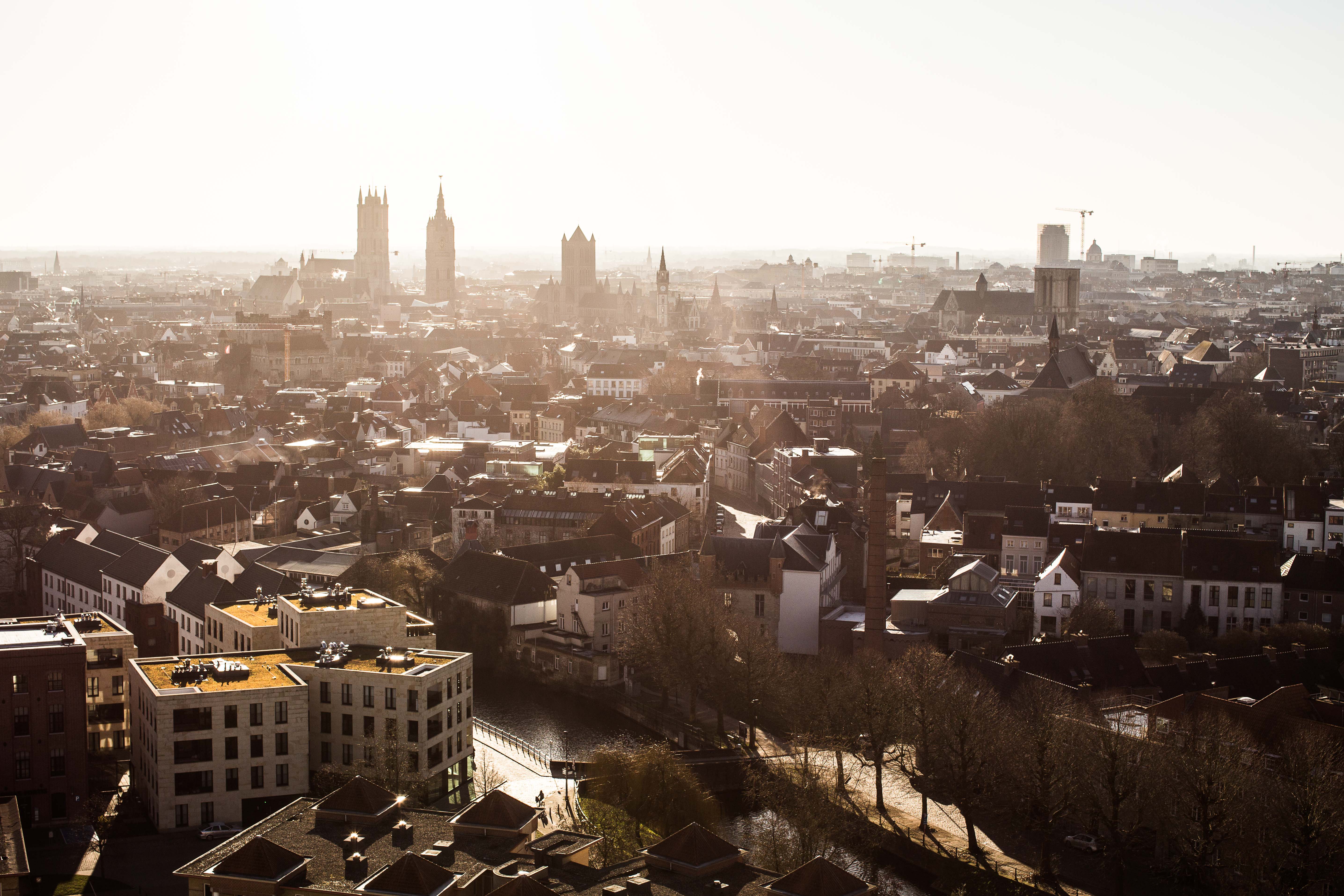
The eye-catcher at Ghent City Museum, the STAM, is a gigantic aerial photograph of Ghent (measuring 300 m2!) that you are allowed to walk all over. Use the multimedia app to see Ghent in detail in four different centuries. ‘Views of Ghent’ shows a view of the city in 1534, maps from 1614 and 1912 and a contemporary aerial photograph.