
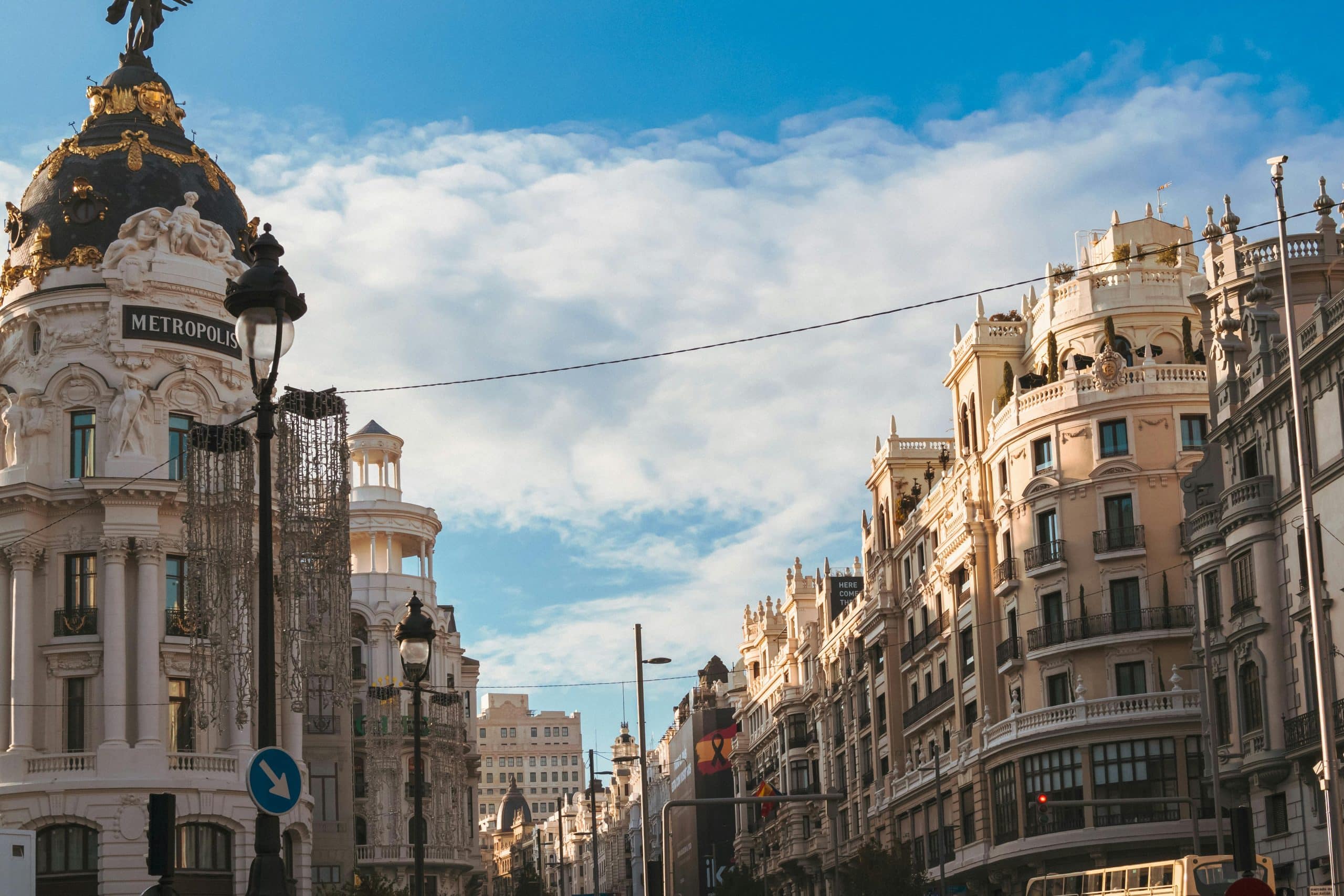
Madrid is a vibrant and diverse city made up of neighbourhoods with very distinct personalities. From historic streets and local markets to nightlife, green spaces, and rich food scenes, each area offers a different way of experiencing life in the Spanish capital.
Whether you’re a student, a young professional, or moving to Madrid for the first time, understanding the city’s neighbourhoods is a key step before choosing where to live. This guide explores Madrid’s most popular areas, combining lifestyle insights with practical accommodation considerations to help you decide where to settle.
Browse available accommodation in Madrid
Understanding Madrid’s Neighbourhoods
Madrid’s neighbourhoods reflect the city’s cultural diversity and dynamic lifestyle. Some areas are known for creativity and nightlife, while others stand out for elegance, tradition, or a strong sense of community.
Malasaña
Malasaña is famous for its alternative spirit, street art, and buzzing nightlife. Vintage shops, independent cafés, and live music venues make it one of the most popular areas among students and young professionals.
Renting in Malasaña. The housing stock is almost entirely shared flats: older buildings with three to five bedrooms, well-placed but variable in condition. Studios exist but are scarce and go fast. Streets closest to Plaza del Dos de Mayo and Calle Fuencarral carry a price premium; pockets around Calle San Andrés and towards Lavapiés offer slightly more room to negotiate. This is one of the fastest-moving rental markets on Uniplaces Madrid, particularly from July ahead of the September intake. Most flatmates are students and young international residents. Browse rooms and flats in Malasaña.
Uniplaces insight: Malasaña is one of the most searched neighbourhoods on Uniplaces Madrid. Demand peaks in August and September; searching in June or July gives you more choice at similar prices.
Uncover the secrets of Malasaña’s alternative scene
La Latina
La Latina is known for its historic charm, traditional tapas bars, and lively plazas. Its narrow streets and authentic atmosphere make it one of Madrid’s most characterful neighbourhoods.
Renting in La Latina. Supply is tight. The neighbourhood is small and the buildings are old, so there are fewer listings here than in larger barrios at any given time. Shared flats are the main option, mostly in period buildings with character but not always lifts. The streets around Calle Cava Baja and Plaza de la Paja are the most in demand and the priciest within the neighbourhood; heading towards Puerta de Toledo opens up more availability. Most flatmates are Spanish professionals or long-term expats rather than students. Browse rooms and flats in La Latina.
Uniplaces insight: La Latina sees steady search interest throughout the year, with a spike from international newcomers in late summer looking for a central but local base. Listings here move slower than in Malasaña, but renters tend to stay longer.
Exploring La Latina: Madrid’s timeless gem of tapas and tradition
Lavapiés
Lavapiés is one of Madrid’s most multicultural neighbourhoods, offering international cuisine, independent art spaces, and a diverse, creative community.
Renting in Lavapiés. The housing stock has a wider range in condition than most central neighbourhoods: fully renovated flats sit alongside buildings that have changed little in decades. Shared flats are standard, and per-room prices are among the lowest in central Madrid. The streets around Calle Lavapiés and Plaza de Agustín Lara have the most active listings; the upper part of the neighbourhood towards Atocha is quieter and slightly more expensive. Flatmates vary widely: students, artists, language assistants, and long-term international residents all live here. Availability is generally better than in Malasaña or Chueca, though good listings still go within days. Browse rooms and flats in Lavapiés.
Uniplaces insight: Lavapiés is among the top searched neighbourhoods on Uniplaces Madrid, with consistent interest from international students and young creatives looking for a central address at a lower price point than Malasaña or Chueca.
Chueca
Chueca is the heart of Madrid’s LGBTQ+ community and is known for its inclusive atmosphere, stylish bars, and trendy restaurants. It’s a lively, central area with a strong social scene.
Renting in Chueca. High demand in a small area pushes prices to the upper end of the central Madrid range. Shared flats are the most common option, but small studios appear more often here than in Malasaña or Lavapiés, which reflects a higher proportion of young professionals renting on their own. The streets around Calle de Hortaleza and Calle de Pelayo are the most searched on Uniplaces; the blocks closer to Alonso Martínez, bordering Chamberí, are slightly quieter at similar prices. Most flatmates are young professionals and international residents — the student concentration is lower than in Malasaña. Budget for a search window of one to two weeks. Browse rooms and flats in Chueca.
Uniplaces insight: Chueca is one of the most searched central neighbourhoods on Uniplaces, with strong demand from young professionals and international residents year-round. Search volumes rise sharply in June and July around Pride, making spring the better time to lock in a September move-in.
Discover Chueca: your guide to Madrid’s LGBTQ+ oasis
Salamanca
Salamanca is one of Madrid’s most elegant districts, recognised for its refined architecture and high-end shopping streets such as Calle de Serrano.
Renting in Salamanca. Salamanca has a broader housing mix than the other neighbourhoods in this guide: purpose-renovated studios, full one-bedroom apartments, and larger shared flats are all available. Shared rooms exist but make up a smaller proportion of the market than in Malasaña or Lavapiés, because more renters here take studios or one-beds. Streets around Calle de Ayala and Calle de Jorge Juan have the most mid-range listings; the blocks nearest the Castellana run more expensive. Most renters are professionals, IE University students, and international residents on longer contracts. Browse rooms and flats in the Salamanca district.
Uniplaces insight: Salamanca is among the most searched neighbourhoods on Uniplaces by IE University students. Listings move fast despite higher prices, particularly in August and September and in January ahead of IE intake periods. Starting your search two months out is advisable.
A day in Salamanca: shopping, dining, and elegance
Chamberí
Chamberí is a residential neighbourhood that sits just north of the centre: quieter than Malasaña or Chueca, but close enough that getting around is straightforward. It borders Alonso Martínez, Bilbao, and Quevedo metro stations (Lines 4 and 5).
Renting in Chamberí. The housing stock is a mix of older shared flats and more recently renovated studios. Prices generally fall between Chueca and Lavapiés, making it a good mid-range option for renters who want to be central without the noise or price of the busier barrios. Streets around Calle de Fuencarral (northern stretch) and around Alonso Martínez are the most active on Uniplaces. Young professionals and couples make up most of the renters, and stays here tend to run longer than in the more student-heavy areas. Browse rooms and flats in Chamberí.
Uniplaces insight: Chamberí attracts steady demand from young professionals looking for a quieter central base. Search interest is consistent year-round with less of the sharp seasonal spike seen in Malasaña or Moncloa.
Moncloa and Argüelles
Moncloa and Argüelles sit directly next to Ciudad Universitaria, where UCM and UPM are based, and the neighbourhood is built around that fact. Served by Metro Moncloa (Lines 3 and 6).
Renting in Moncloa and Argüelles. Purpose-adapted shared flats and student residences dominate the housing stock: this area has the highest concentration of student accommodation in Madrid. Rooms are plentiful compared to central barrios, but they go fast — this is the fastest-moving rental market on Uniplaces Madrid in July, ahead of the September intake. Most flatmates are UCM and UPM students. If you are not a student, Argüelles offers a slightly more mixed housing stock than Moncloa and tends to attract a broader renter profile. Browse rooms and flats in Moncloa and Argüelles.
Uniplaces insight: Moncloa and Argüelles account for the highest volume of student bookings on Uniplaces Madrid. Listings posted in July are typically taken within days. Searching in May or June is strongly advisable for a September move-in.
For a campus-by-campus breakdown of where to live near Madrid’s main universities, see our UCM accommodation guide and our UPM accommodation guide.
Retiro
Retiro is a calm, residential neighbourhood built around Madrid’s main park: 350 acres of green space with running tracks, a lake, and a weekend book market on the doorstep. Served by Metro Retiro and Ibiza (Line 9).
Renting in Retiro. The housing stock skews towards larger, older apartments. Shared flats are available but studios and one-beds make up a bigger share here than in the barrios further west, reflecting a higher proportion of renters looking for more space and a quieter environment. Demand is moderate and less seasonal than in student-heavy areas. Families and professionals on longer stays make up most of the rental market. Browse rooms and flats in Retiro.
Uniplaces insight: Retiro attracts a more settled renter profile than central barrios: search interest is steady rather than seasonal, and average stay lengths run longer than the Madrid average on Uniplaces.
Tetuán
Tetuán is one of the more affordable central-adjacent options in Madrid, with a working-class, mixed community and a busy street market scene centred on Mercado de Maravillas. Served by Metro Tetuán and Cuatro Caminos (Lines 1 and 6).
Renting in Tetuán. Most of the housing is older shared flats at some of the lowest per-room prices available this close to the centre. Availability is generally good compared to more central barrios, and the metro connections make most of Madrid reachable within 20 minutes. A practical choice for renters on a tighter budget who need good connections and don’t mind being one stop outside the most central areas. Browse rooms and flats in Tetuán.
Uniplaces insight: Tetuán is one of the most searched affordable neighbourhoods on Uniplaces Madrid, consistently attracting budget-conscious students and long-term international residents who prioritise metro access over a central postcode.
Choosing by Budget: Madrid’s Neighbourhood Tiers
If budget is your starting point rather than lifestyle, Madrid’s neighbourhoods broadly fall into three tiers.
Value: Lavapiés and Tetuán. Both sit within or just outside the M-30 ring with good metro connections, and offer some of the lowest per-room prices available in central Madrid. Lavapiés is the better choice if you want to stay inside the city centre; Tetuán is one stop further out but equally well connected. For students at Carlos III, Getafe and Leganés offer even lower prices with direct Cercanías access to campus.
Mid-range: La Latina, Chamberí, Moncloa, Argüelles, and Retiro. Prices here are higher than Lavapiés or Tetuán but the housing stock is more consistent in quality, and all five areas are well served by metro. Moncloa and Argüelles are the default for UCM and UPM students; Chamberí suits young professionals who want a quieter central base; La Latina and Retiro appeal to renters who prioritise character or green space over nightlife proximity.
Premium: Malasaña, Chueca, and Salamanca. You pay for the postcode and the proximity to the most active parts of the city. Malasaña and Chueca attract the highest demand from students and young professionals; Salamanca is the most expensive and suits professionals and longer-stay renters. Worth noting: Madrid’s transport network is good enough that living one tier down from your preferred neighbourhood rarely adds more than 15 minutes to most journeys.
Choosing the Right Neighbourhood to Live in Madrid
Each neighbourhood offers a different mix of lifestyle, budget, and housing options. Understanding these differences helps narrow down the areas that best match your lifestyle before starting your accommodation search. By combining neighbourhood knowledge with a clear idea of your budget and lifestyle, you’ll be better prepared to find suitable accommodation and a place that truly feels like home. For a broader view of what daily life looks like across the capital, exploring a comprehensive city guide to living in Madrid can help you make more informed decisions.
FAQ About Madrid’s Neighbourhoods
Which Madrid neighbourhood is best for students?
It depends on your university. Students at UCM and UPM are best placed in Moncloa or Argüelles, both walkable from Ciudad Universitaria and with the highest concentration of student housing in the city. IE University students are closest to campus in Salamanca or Chamberí. Carlos III students typically live in Getafe or Carabanchel. For a campus-by-campus breakdown, see our guides to accommodation near UCM and accommodation near UPM.
Which Madrid neighbourhood is best for expats and international residents?
Malasaña, Chueca, and Lavapiés are the most common first choices for international residents: all three are central, have well-established expat communities, and offer good availability of shared flats. Malasaña suits those who want a creative, social scene; Chueca works better for young professionals looking for a polished central base; Lavapiés appeals to those after a multicultural, community-oriented environment at a lower price point. Chamberí is a popular second move for expats who have settled in Madrid and want something quieter without leaving the centre. Salamanca is the default for professionals on higher budgets or those relocating with a family.
Which neighbourhood is best for young professionals in Madrid?
Chueca and Chamberí are the most common choices for young professionals on Uniplaces: both are central, well-connected, and have a mix of shared flats and studios suited to people renting alone or as a couple. Salamanca works better for those on higher budgets or working near the Castellana business corridor.
Is it easy to find a shared flat in Madrid?
Shared flats are the most common rental format in Madrid and the main option in every neighbourhood in this guide. Availability shifts significantly by time of year. September is the most competitive month, with listings going within days in areas like Malasaña and Moncloa. Searching in June or July for a September move-in gives you more options and more time to compare.
Is Lavapiés safe to live in?
Yes, for most renters. Lavapiés has a reputation that does not fully reflect the day-to-day reality of living there. It is a dense, busy neighbourhood with a lot of foot traffic and street life at all hours, which some people find reassuring and others find unsettling. Petty theft can occur in busier areas, as in any central neighbourhood. The vast majority of residents, including a large international student and expat population, live there without issue. If you are considering Lavapiés, visiting at different times of day before signing a lease is always a good idea, as conditions vary street by street.
What is the difference between renting in Malasaña and Chueca?
Both are central and attract a similar age group, but the housing and renter profiles differ. Malasaña is mostly larger shared flats in older buildings, with a typical renter who is a student or recent graduate. Chueca has more studios and smaller shared flats, and a higher proportion of young professionals renting alone. Per-room prices in Chueca tend to be slightly higher for comparable conditions.
Which Madrid neighbourhood is best for a quiet life but still central?
Chamberí is the most common answer to this question: it sits just north of the centre, has a genuinely residential feel, and is quieter than Malasaña or Chueca without being far from either. Salamanca is the other strong option: wider streets, well-maintained buildings, and very little nightlife noise, though it comes at a higher price point. Retiro is worth considering for anyone who prioritises green space: the neighbourhood sits directly alongside the park and has a calm, family-oriented atmosphere, with good metro connections to the centre. Of the three, Chamberí tends to be the most popular choice on Uniplaces for renters who specifically want to avoid noise without sacrificing a central location.
Is it better to live in a shared flat or a student residence in Madrid?
Shared flats are cheaper and give you more choice of location. Student residences cost more but include utilities and sometimes meals, which suits people arriving for the first time who want less to organise. In 2025, 72% of Madrid bookings on Uniplaces were for rooms in shared flats. For a full comparison, see our cost of living in Madrid guide.