
Spain hosts hundreds of festivals each year, but only a handful have reached iconic status for their scale, atmosphere, and unforgettable impact. From adrenaline-filled street events to visually spectacular celebrations rooted in regional identity, these festivals represent Spain at its most expressive and alive.
This curated selection highlights ten of Spain’s most famous festivals and events, chosen for their popularity, uniqueness, and cultural visibility. These celebrations are not an exhaustive list, but a showcase of experiences that define Spain’s festival scene and attract visitors from around the world.
1. La Tomatina — Buñol
Few events are as visually striking as La Tomatina. Held each August in the small town of Buñol, this world-famous festival turns the streets into a sea of red as thousands of participants throw ripe tomatoes in a joyful, hour-long food fight.
What makes La Tomatina iconic is its sheer scale and playful absurdity. Protective goggles, crushed tomatoes, and collective laughter define the experience, making it one of Spain’s most photographed and shared festivals worldwide.
2. San Fermín — Pamplona
San Fermín is synonymous with adrenaline. Each July, Pamplona becomes the stage for the Running of the Bulls, where participants sprint through narrow streets ahead of charging bulls.
Beyond the famous run, the city explodes with music, parades, and white-and-red dressed crowds celebrating day and night. The combination of risk, tradition, and communal energy has made San Fermín one of Spain’s most globally recognised events.
3. Las Fallas — Valencia
Every March, Valencia transforms into an open-air art gallery. Gigantic satirical sculptures known as fallas fill the streets, combining craftsmanship, humor, and political commentary.
The festival culminates in La Cremà, when these towering creations are ceremoniously burned in a dramatic display of fire and fireworks. Few festivals match the scale, artistry, and spectacle of Las Fallas, making it one of the most visually impressive celebrations in Valencia’s festival calendar.
4. Semana Santa — Seville
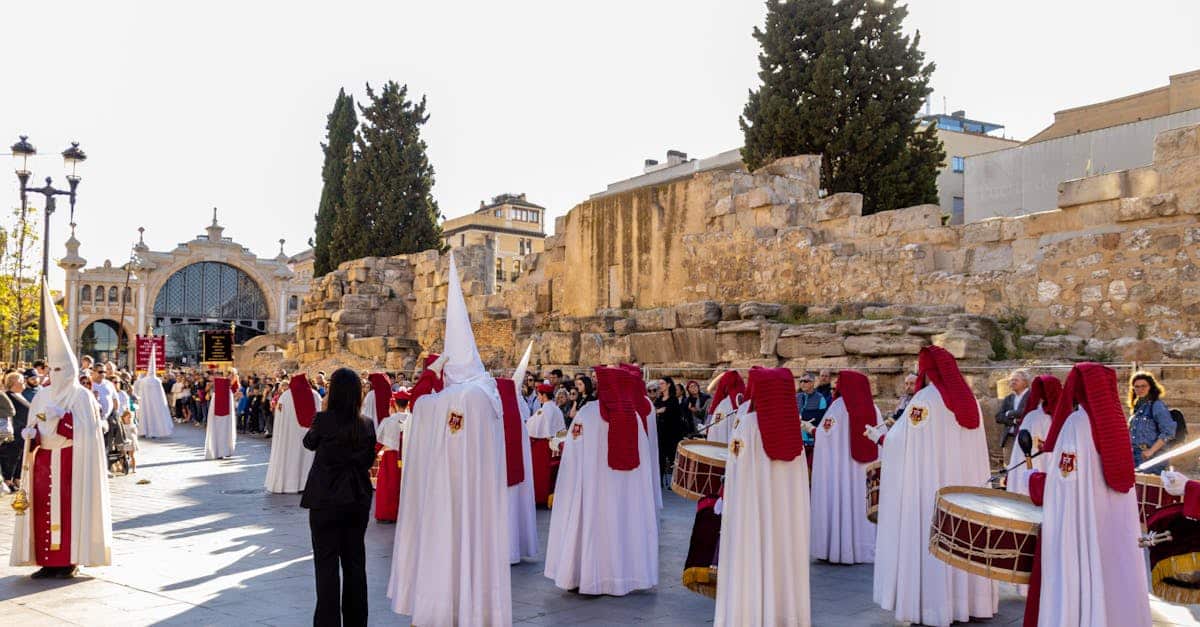
Semana Santa in Seville is one of Spain’s most powerful and atmospheric events. During Holy Week, solemn processions move through the city’s historic streets, accompanied by music, incense, and candlelight.
The visual impact of elaborate floats and traditional robes, combined with the emotional intensity of the moment, makes this celebration one of the most striking religious events in Europe.
5. Carnival of Santa Cruz de Tenerife
Often compared to Rio’s Carnival, this February celebration fills the streets of Tenerife with extravagant costumes, music, and nonstop energy.
Parades, competitions, and open-air parties dominate the city, while bold colors and flamboyant performances define the atmosphere. It’s one of Spain’s liveliest and most internationally attended festivals.
6. Feria de Abril — Seville
Feria de Abril is a celebration of Andalusian style and joy. Held shortly after Easter, this week-long fair features flamenco dresses, horse parades, music, and brightly decorated tents known as casetas.
The festival blends tradition with social celebration, creating a welcoming environment where locals and visitors gather to dance, eat, and celebrate well into the night.
7. La Mercè — Barcelona
Barcelona’s largest annual festival takes place in late September in honor of the city’s patron saint. La Mercè fills public spaces with concerts, parades, fireworks, and iconic Catalan traditions.
Highlights include human towers (castells), fire runs (correfoc), and large-scale street performances, offering a dynamic mix of tradition and contemporary culture.
8. San Isidro — Madrid
Each May, the city celebrates its patron saint with one of the most important traditional festivals in Madrid, bringing music, costumes, and community gatherings to public spaces across the capital.
Parks and squares become meeting points for locals enjoying music, food, and dance, creating a relaxed and inclusive atmosphere that reflects Madrid’s community spirit.
9. Jerez Horse Fair — Jerez de la Frontera
This May festival combines equestrian excellence with flamenco culture. Horse parades, dressage displays, and live performances fill the fairgrounds, showcasing Andalusia’s deep connection to horses and music.
The event balances elegance and celebration, making it one of Spain’s most distinctive regional fairs.
10. Other Notable Festivals Worth Experiencing
Spain’s diversity extends far beyond this list. Other remarkable events include:
- The Wine Battle of Haro — a playful wine-soaked celebration
- Feast of St. James — a major event in Santiago de Compostela
- Rioja Wine Festival — celebrating harvest traditions
- Jerez Sherry Festival — combining wine, music, and culture
These festivals further illustrate the breadth of experiences available across Spain’s regions.
Conclusion
Spain’s festivals are moments when cities and towns fully express their identity through celebration, creativity, and collective energy. The ten events highlighted here represent the country’s most iconic and widely recognised celebrations, each offering a distinct atmosphere and unforgettable experience.
Whether you attend one or several, these festivals capture Spain at its most dynamic — a country where tradition and spectacle come together in extraordinary ways.