
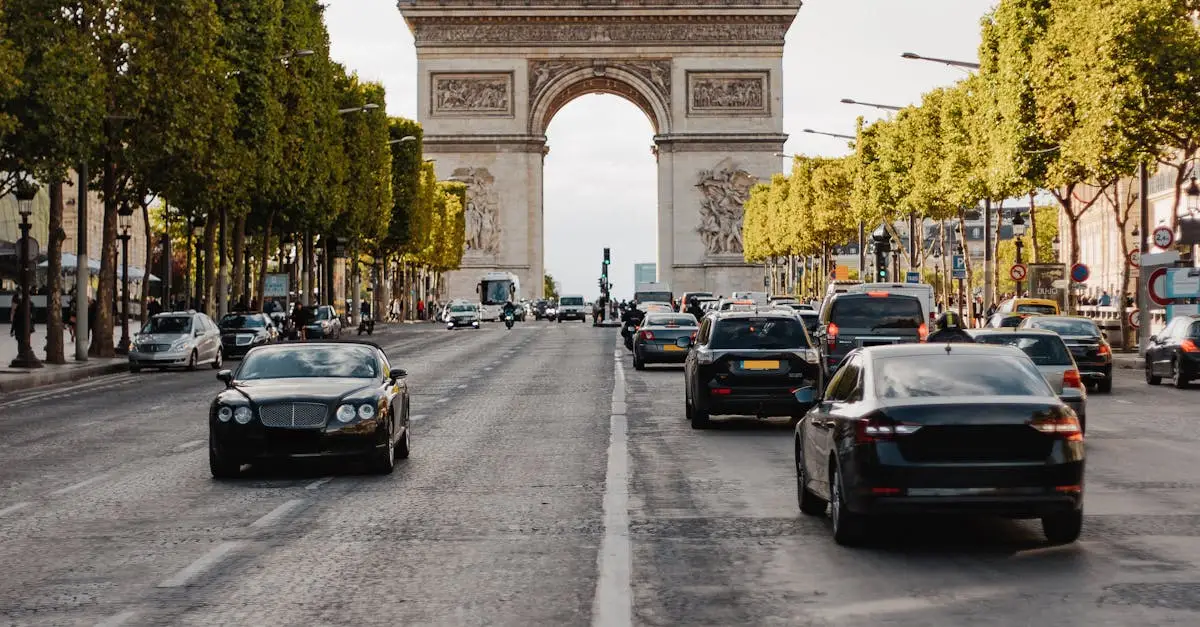
Your complete guide to driving in France: license requirements, road rules, insurance, and essential tips for expats navigating French roads safely.
Navigating the roads of France brings both excitement and challenges for expats ready to embrace their new life. From bustling Parisian boulevards to scenic Mediterranean routes in Marseille, driving in France opens doors to independence and adventure in your adopted home.
This guide walks you through essential license requirements and practical tips for expats who plan to drive in France. We’ll explore:
- Converting your existing driver’s license to a French one
- Understanding French road rules and regulations
- Mastering city driving in Paris and Marseille
- Managing parking and toll systems
- Handling insurance and emergency situations
Whether you’re relocating for work, study, or lifestyle change, knowing how to drive confidently in France helps you integrate smoothly into daily life. Let’s dive into the key aspects of hitting French roads safely and legally. You might want to take a look at:
If you’re deciding between driving and public transport, compare public transport systems in Paris and Marseille.
Understanding License Requirements for Expats
Navigating the French driving license system requires understanding specific requirements based on your current license status. The rules vary significantly between EU and non-EU license holders.
For EU License Holders:
- Valid EU/EEA licenses can be used indefinitely in France
- No need for license exchange unless expired
- Registration with local authorities recommended
For Non-EU License Holders:
- Foreign licenses remain valid for 12 months after establishing residency
- Must exchange license within first year of residence
- Driving privileges suspended if exchange not completed on time
Required Documents for License Exchange:
- Valid passport or national ID
- Current residence permit
- Original driving license with official translation
- Proof of address (utility bill, rental agreement)
- 3 passport-sized photos
- Medical certificate for specific vehicle categories
Special Requirements by License Category:
- Category A (Motorcycles): Medical exam required
- Category C (Heavy vehicles): Additional health screening
- Category D (Buses): Comprehensive medical evaluation
- Professional drivers: Regular medical check-ups mandatory
Processing Times and Fees:
- Standard processing: 2-3 months
- Express service available in select cases
- Administrative fee: €50-€100
- Translation costs: €50-€80 per document
Medical Opinion Requirements:
- Mandatory for drivers over 70
- Required for specific health conditions
- Vision test compulsory
- Physical fitness assessment needed for commercial licenses
The French authorities maintain strict verification processes for foreign licenses. Applications missing required documents face immediate rejection. Keeping copies of all submitted paperwork helps track your application status through the system.
Obtaining a French Driver’s License
The path to securing your French driver’s license (permis de conduire) involves specific requirements and tests. Here’s what you need to know:
Step 1: Theory Test (Code de la Route)
- Register at an approved driving school
- Study traffic rules, road signs, and safety regulations
- Complete 40 multiple-choice questions
- Pass mark: 35/40 correct answers
- Test available in English through official testing centers
Step 2: Mandatory Driving Lessons
- Minimum 20 hours of practical lessons
- Learn French driving techniques and regulations
- Practice urban, rural, and highway driving
- Night driving sessions included
- Additional hours if needed based on instructor assessment
Step 3: Practical Driving Test
- 32-minute examination with certified examiner
- Demonstrate parking skills
- Navigate various road conditions
- Execute safety checks
- Show awareness of eco-driving principles
The Points System
- New licenses start with 6 points
- Points increase to 12 after 3 years without infractions
- Traffic violations result in point deductions
- License suspension if all points are lost
- Points recoverable through safety courses
Cost Considerations
- Theory test: €30
- Driving school registration: €200-€400
- Practical lessons: €45-€60 per hour
- Practical test: €62
- Total investment: approximately €1,200-€1,800
For more information about obtaining a French driver’s license, visit Service Public – French Driver’s License Information or access the online application portal at ANTS – Online Application Portal.
Navigating Driving Rules and Regulations in France
France’s driving regulations create a structured system designed to keep all road users safe. Drivers must stay on the right side of the road and maintain specific speed limits based on road types:
- Motorways (Autoroutes): 130 km/h in good weather, 110 km/h in rain
- Dual Carriageways: 110 km/h in good weather, 100 km/h in rain
- Rural Roads: 80 km/h
- Urban Areas: 50 km/h
- School Zones: 30 km/h
Essential road safety rules include:
- Zero phone use while driving
- Blood alcohol limit of 0.5g/L
- Mandatory seat belts for all passengers
- Children under 10 must sit in back seats
- Carrying a high-visibility vest and warning triangle
Traffic violations result in point deductions from your license:
- Running red lights: -4 points
- Speeding: -1 to -6 points
- Drunk driving: -6 points
- Phone use: -3 points
Dealing with Specific Road Challenges in Paris and Marseille
Paris Road Navigation Tips:
- Use peripheral routes during rush hours (7-10 AM, 4-8 PM)
- Watch for cyclists and scooters weaving through traffic
- Stay alert for sudden lane changes by other drivers
- Avoid driving in bus lanes marked with solid white lines
- Be prepared for numerous roundabouts, particularly Arc de Triomphe
Marseille Traffic Management:
- Navigate narrow streets cautiously in Le Panier district
- Expect heavy port traffic near Vieux-Port
- Watch for pedestrians in tourist-heavy areas
- Use underground parking to avoid limited street spaces
- Plan routes avoiding La Canebière during peak hours
Road signs in both cities use international symbols, but local knowledge helps interpret specific restrictions. Many areas implement Zone à Faibles Émissions (Low Emission Zones) requiring clean air stickers displayed on windshields.
Understanding Parking Regulations and Toll Systems in France
Parking Regulations in French Cities
Parking in French cities follows specific color-coded zones. Blue zones allow free parking for limited durations with a parking disc, while paid zones require tickets from nearby meters. Urban parking spots are marked by:
- White lines: Regular parking spots
- Yellow lines: No parking areas
- Blue lines: Time-limited free parking
Public Parking Lots (Parkings)
Public Parking Lots (Parkings) offer secure alternatives to street parking:
- Underground facilities in city centers
- Park-and-ride lots near public transit
- Shopping center parking with validation systems
Toll Systems on French Highways
French highways (autoroutes) operate on a toll system managed by private companies. Drivers can pay tolls through:
- Cash payments
- Credit cards
- Electronic toll tags (télépéage)
- Contactless payments
The Liber-t Pass enables automatic toll payments and offers discounts for frequent travelers. Toll rates vary based on:
- Vehicle type
- Distance traveled
- Specific route taken
Check current autoroute toll rates
Time-Saving Tips for Parking and Tolls
Here are some tips to save time when it comes to parking and tolls in France:
- Download the Parking Map France app for easy navigation to available parking spots.
- Consider monthly parking subscriptions if you plan to stay in one place for an extended period.
- Get an electronic toll tag for faster highway travel without stopping at toll booths.
- Keep small change ready for parking meters that may not accept card payments.
Learn more about French parking regulations
Ensuring Compliance with Car Insurance Requirements and Emergency Services Protocols
Car insurance in France isn’t optional – it’s a legal requirement for all drivers. The minimum coverage required is third-party liability insurance (responsabilité civile), which protects against damage or injury to others.
Key Insurance Factors That Impact Your Costs:
- Driving experience and claims history
- Vehicle type and age
- Annual mileage
- Parking location (street vs. secure garage)
- Security features installed
Required Documents for Car Insurance:
- Valid driver’s license
- Proof of residence
- Vehicle registration papers
- Previous insurance records
Emergency situations require quick action. The universal emergency number in France is 112, which connects you to operators who speak multiple languages. Keep these essential contacts saved:
- Police: 17
- Ambulance: 15
- Fire Brigade: 18
For roadside assistance, contact your insurance provider’s dedicated breakdown service. Many car rental companies in Paris offer 24/7 support services for expats.
Essential Emergency Kit Requirements:
- Warning triangle
- High-visibility vest
- First aid kit
- Spare bulbs
- Breathalyzer test
Insurance companies often provide specialized packages for expat car rentals, including comprehensive coverage and English-speaking assistance. Request detailed policy information in English when securing your coverage.
Additional Resources for Further Guidance
Ready to start your expat driving journey in France? Here are trusted resources to support your transition:
- Service-Public.fr – Official government portal for driver’s license information
- ANTS Platform – Online platform for license applications and exchanges
- French Road Safety – Latest updates on traffic rules and regulations
Local Support Networks:
- Join expat Facebook groups dedicated to driving in France
- Connect with local driving schools offering English-language services
- Download helpful mobile apps like Waze or Coyote for real-time traffic updates
These resources will help you navigate the French driving system with confidence. Start your preparation today – your new driving adventure in France awaits! For greener options, see biking and eco-friendly transport in France.
Additional Resources for Further Guidance
Ready to dive deeper into driving regulations in France? These trusted resources provide comprehensive information to help you navigate the French roads with confidence:
Official Government Resources:
- Service-Public.fr – The official French administration website with detailed information on driver’s licenses and regulations
- ANTS Portal – Where you’ll submit your license exchange application and track its progress
Expat-Focused Guides:
- Expatica’s Complete Guide to Driving in France – Practical tips and detailed explanations of French driving rules
- France Diplomacy – Essential information for non-EU citizens about license requirements
Helpful Tools:
- Bison Futé – Real-time traffic updates and road conditions
- Autoroutes.fr – Information about French motorways, toll prices, and route planning
These resources offer step-by-step guidance for:
- License exchange procedures
- Required documentation
- Testing requirements
- Traffic rules and regulations
- Insurance requirements
- Road signs and signals
Each website is regularly updated with current regulations and requirements, helping you stay informed about any changes in French driving laws. For day-to-day safety, pair this with staying safe in France to avoid common travel scams.