
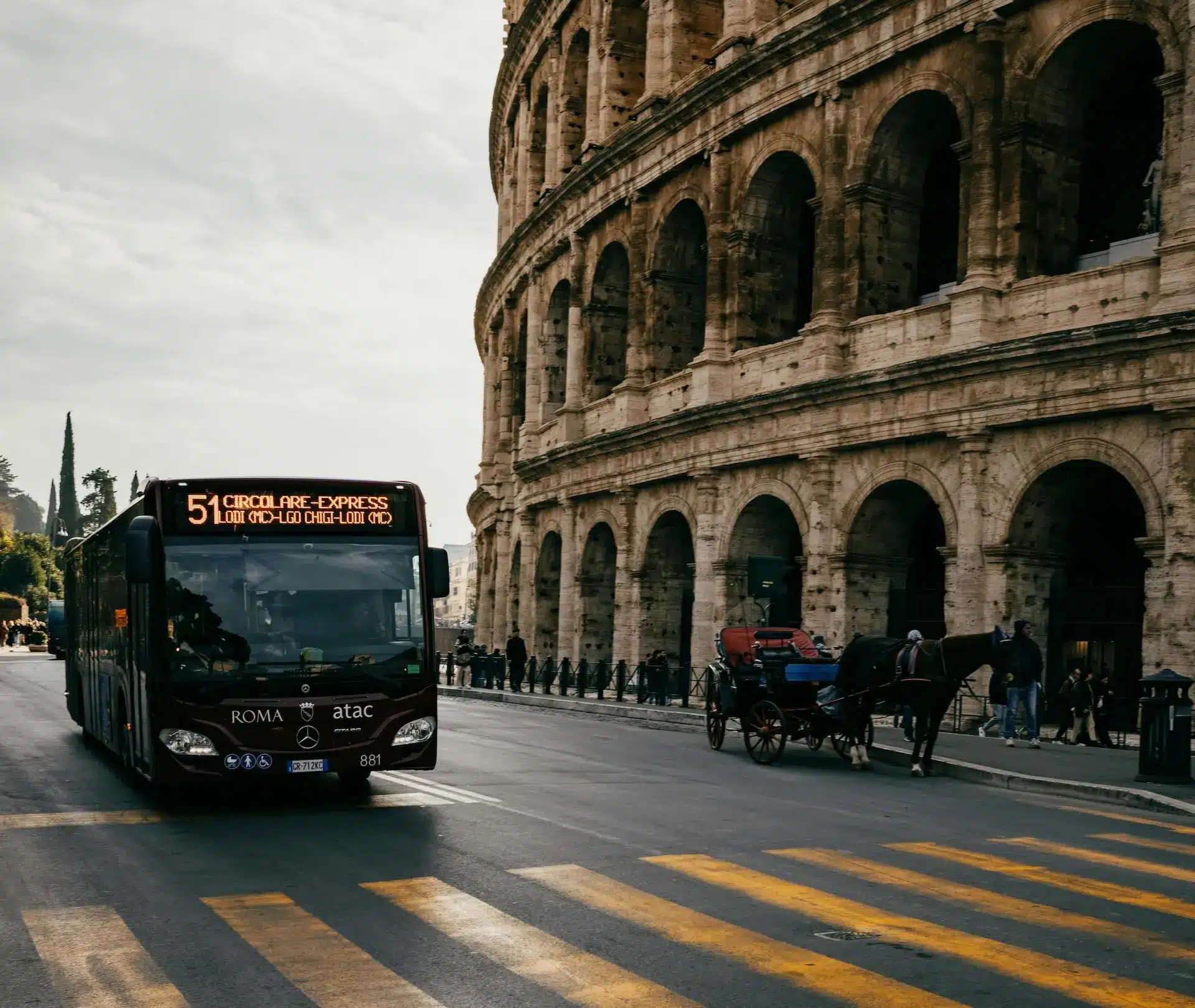
Navigate Rome effortlessly with our public transport tips. Discover buses, metro, and trains for a smooth and enjoyable travel experience.
Introduction
Getting around Rome can be easy if you have the right information. Public transport in Rome is not only extensive but also essential for travelers exploring this historic city. Local transportation in Rome includes various options:
- Buses: The main mode of local transit, ideal for short trips.
- Metro: Convenient for longer journeys with three main lines.
- Trains: Connecting you to airports and other destinations.
An overview of public transport in Rome (including airports, rail, and roads) shows how these options seamlessly connect different parts of the city and its surrounding areas. This guide will share tips for getting around the city like a local, making your travel experience smooth and enjoyable. From understanding ticket options to using validation machines, we’ve got you covered.
If you’re planning your move, you can browse verified rooms and apartments in Rome listings and filter by budget, location, and move-in date.
Public Transport Options in Rome
1. Buses in Rome: The Backbone of Local Transit
Public transit in Rome relies heavily on its extensive bus network. Rome buses serve as the backbone of local transit, covering nearly every corner of the city.
Operating Hours
Buses run from 5:30 AM to midnight daily, with additional night services on key routes. This ensures that whether you’re an early riser or a night owl, there’s a bus available.
Key Routes
Most buses converge at Termini Station, the central hub for public transit. From here, you can catch buses to major attractions like the Colosseum, Vatican City, and Trastevere.
Ticket Options
Here are the ticket options available for Rome buses:
- Standard ticket valid for 100 minutes (€1.50)
- 24-hour ticket (€7.00)
- 48-hour ticket (€12.50)
- 72-hour ticket (€18.00)
- Children under 10 travel for free with an accompanying adult
Rome’s bus network is vital for short journeys and connecting to other transport modes like the metro and trains. It’s common to see locals hopping on a bus to reach their destination quickly.
The Rome bus network also features night buses that cover essential routes for those exploring the city’s nightlife. These buses are marked with an “N” before their route number.
Ticket Validation: Don’t forget to validate your ticket using the machines available on buses and trams. Inspections happen occasionally, and unvalidated tickets can lead to fines.
For tourists, Rome hop-on-hop-off buses offer a convenient way to explore major landmarks without worrying about navigating public transit routes. These buses provide commentary and multiple stops around significant attractions.
Using Rome buses allows you to experience the city like a local while ensuring you can reach all your desired sights efficiently. The flexibility offered by the bus system complements other modes of transport available in Rome.
2. Navigating the Metro System: A Quick Guide to Getting Around
The Rome metro system is a crucial part of the city’s public transit network. Despite not being as extensive as the metros in London or Paris, it efficiently covers longer distances within the city. The metro consists of three lines:
- Line A (Orange): Runs from Battistini to Anagnina, covering major tourist spots like the Vatican Museums and Piazza di Spagna.
- Line B (Blue): Connects Laurentina to Rebibbia, passing through key areas such as the Colosseum and Circus Maximus.
- Line C (Green): Extends from Monte Compatri-Pantano to San Giovanni.
Using the Rome metro map, travelers can easily navigate between these lines. Each line intersects at various points, allowing for smooth transfers. Stations are well-marked and have clear signage in both Italian and English.
Ticket validation is simple but essential. Tickets purchased from vending machines or kiosks must be validated at the start of your journey using validation machines located inside metro stations. This process ensures your ticket is usable for the duration of its validity period.
Accessibility is a priority in Rome’s metro system, with elevators and ramps available at most stations to assist those with mobility challenges.
For both locals and tourists, understanding how to use the Rome metro effectively can make travel more convenient. The combination of buses, metro, and trains provides a comprehensive public transport network that meets various travel needs within the city.
3. Train Services: Connecting You to Airports and Beyond
Navigating Rome’s public transport system includes a vital component—train services, especially when connecting to airports. The Leonardo Express is a standout option, providing a direct link between Termini Station and Fiumicino Airport. This train departs every 15 minutes and takes about 32 minutes to reach the airport, making it a convenient choice for travelers.
Amenities include:
- Air conditioning
- Luggage racks
- No Wi-Fi
For those traveling to Ciampino Airport, bus services from Termini Station offer an alternative route. Companies like Terravision operate these routes, ensuring that both major airports are accessible.
Rome’s train network extends beyond airport connections. It integrates seamlessly with the city’s public transit, including buses and the metro. This synergy allows both locals and tourists to navigate the city efficiently.
When using Rome trains or any public transit, it’s essential to understand ticket options and validation processes. Tickets for trains can often be used across different modes of transport, adding flexibility to your travel plans.
The integration of buses, metro, and trains creates a cohesive system designed to make exploring Rome easy and efficient.
Tips for Navigating Public Transport in Rome Like a Local
Strategies for Purchasing Tickets and Understanding Service Schedules
Purchasing tickets for public transport in Rome is straightforward. You can buy them at:
- Ticket vending machines: Available at metro stations and some bus stops.
- Tobacconists: Look for stores with a “T” sign.
- Newsstands: Often found near major bus stops and metro stations.
For understanding service schedules, consider using apps like Moovit or Rome2rio, which provide real-time updates and route planning.
Making Use of Validation Machines on Buses and Trams
Validation is crucial to avoid fines. When you board a bus or tram:
- Insert your ticket into the yellow validation machine.
- Listen for the beep and check the printed timestamp.
This step ensures your ticket is active for the duration of its validity. Keep it handy in case of inspections.
By following these tips for using public transit, navigating public transport in Rome becomes much simpler and more efficient.
Exploring Rome on Foot: A Perfect Complement to Public Transport
Walking in Rome offers a unique way to discover the city’s charm while providing flexibility. Many of Rome’s major sights are within walking distance, making it easy to connect different attractions without relying solely on public transport.
Advantages of Walking Between Attractions
- Immersive Experience: Walking lets you soak in the atmosphere, discover hidden gems, and enjoy the architecture.
- Health Benefits: It’s a healthy way to explore, keeping you active throughout your trip.
- Cost-Effective: Save money on transport fares by walking shorter distances.
Recommended Walking Routes
- Colosseum to Roman Forum: Start at the Colosseum, walk through the Roman Forum, and end your journey at Piazza Venezia. This route is rich in historical landmarks.
- Trevi Fountain to Spanish Steps: Enjoy a leisurely stroll from the Trevi Fountain, passing by charming streets and ending at the iconic Spanish Steps.
- Vatican City to Castel Sant’Angelo: Begin at St. Peter’s Basilica in Vatican City and walk along Via della Conciliazione to reach Castel Sant’Angelo.
For routes that are longer or less direct, use Rome’s comprehensive public transport network as needed. Combining walking with buses or the metro ensures you can efficiently navigate around Rome while still enjoying its vibrant street life.
To choose the best base, explore Trastevere, Monti, Prati, and Testaccio and match them to your commute.
Conclusion: Embrace the Convenience of Public Transport in Rome!
Exploring public transport in Rome opens up a world of convenience and adventure. With buses, metro, and trains connecting you to various parts of the city, getting around has never been easier.
Here’s a breakdown of each mode of transport:
- Buses: Perfect for short trips and connecting to other modes.
- Metro: Efficient for longer distances with its three-line network.
- Trains: Ideal for quick airport transfers, especially with the Leonardo Express.
Don’t forget these efficient travel tips:
- Purchase tickets in advance.
- Always validate your ticket on buses and trams.
- Use maps and apps for seamless navigation.
Combine walking with public transport for an enriched experience. If you’d rather have more flexibility and comfort, you can also consider driving in Milan and Rome. This blend lets you appreciate Rome’s charm while staying efficient. Happy travels!