
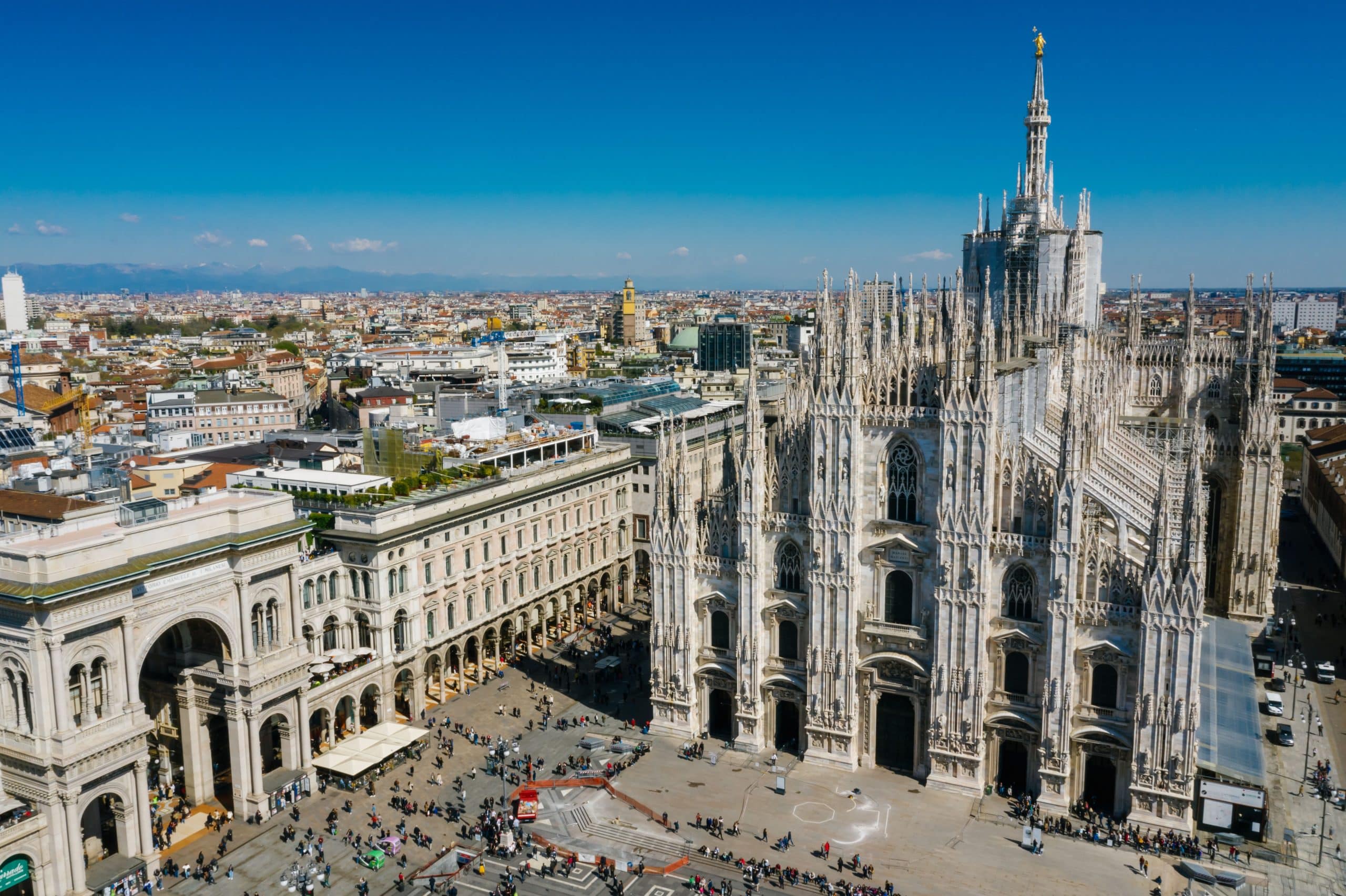
Milan is the Italy that works. Where Rome and Florence trade on history, Milan runs on energy: fashion, design, finance, aperitivo culture and Italy’s most efficient public transport. For Erasmus students — especially in business, engineering, design or economics — it offers the country’s deepest pool of English-taught courses and one of its biggest international communities.
This guide covers everything you need for a great exchange in Milan: the universities, the best neighbourhoods, what it costs, how the academic year works, and where the Erasmus community comes together.
Browse student accommodation in Milan
Why choose Milan for your Erasmus?
Milan is Italy’s most cosmopolitan and forward-looking city. It has the best public transport in the country (four metro lines, trams and buses), the widest range of English-taught programmes, and a huge international student population — over 30% of Politecnico’s students are international. The aperitivo and design culture, the proximity to the Alps and the lakes, and excellent rail links across Italy and Europe round out the appeal.
The main trade-off is cost: Milan is the most expensive city in Italy for students. But it compensates with strong student infrastructure — well-funded university canteens (with income-based meal prices), great transport, and abundant student housing.
Universities in Milan for Erasmus students
Milan’s universities are among the most prestigious in Italy, and several are leaders in their fields.
Politecnico di Milano
Italy’s top engineering, architecture and design university, and a global name in design. Its main Leonardo campus is in Città Studi; a second campus is in Bovisa to the north. With a very large international intake, it anchors the city’s biggest student district.
Università degli Studi di Milano (La Statale)
The largest research university in Lombardy, covering medicine, law, humanities and sciences, with historic buildings including the iconic Ca’ Granda in the centre and science faculties in Città Studi.
Università Bocconi
One of Europe’s leading universities for economics, finance and management, with a modern campus near Porta Romana. Bocconi draws a highly international student body and is the reason Porta Romana is such a popular student area.
Università Cattolica and design schools
Università Cattolica del Sacro Cuore, near the Duomo, is strong in economics, psychology and linguistics. Milan is also home to top design and fashion schools — NABA, Istituto Marangoni, IULM — which cluster students around Navigli and the centre.
Uniplaces insight: Milan’s student geography is clear-cut: Città Studi for Politecnico and Statale science faculties, Porta Romana for Bocconi, Bovisa for Politecnico’s second campus, and Navigli for the design schools. Matching your neighbourhood to your campus turns a potential cross-city commute into a short metro ride.
Best neighbourhoods for Erasmus students in Milan
Milan’s student areas are well-defined and well-connected.
Città Studi is the main student district — home to Politecnico’s Leonardo campus and Statale’s science faculties, dense with student housing, affordable cafés and green space. Porta Romana / Guastalla is the go-to for Bocconi students, lively and well-connected on the yellow MM3 line, with prices reflecting its desirability. Navigli is the canal-side nightlife hub, popular with design students — vibrant but pricier. Bovisa / Dergano is more affordable, near Politecnico’s Bovisa campus, with good metro links. Isola and NoLo offer trendy, better-value options a short metro ride from the centre.
Uniplaces insight: Milan is Italy’s priciest student market and good central rooms vanish fast — for a September move-in, start in May–June; for a February intake, start in November–December. Bovisa and Bicocca are among the most affordable; Porta Romana and Navigli the priciest. For platform comparisons and scam alerts, see our guide to the best websites to find student accommodation in Milan.
Cost of living in Milan for students
Milan is the most expensive Italian city for students, but its strong infrastructure softens the blow. Most students spend between €700 and €1,200 a month, with rent the dominant cost.
As a rough monthly guide:
- Rent: a room in a shared flat typically runs €500–€800; cheaper in Bovisa and Bicocca, pricier in Porta Romana and Navigli.
- Utilities: add roughly €80–€150 for shared flats if not included.
- Groceries: around €200–€300, with Esselunga, Lidl and Carrefour the budget options.
- Transport: the ATM network is Italy’s best; a monthly pass is around €22 for under-26s.
- University canteens: income-based (ISEE) meal pricing keeps eating affordable for students.
The academic year and key dates
Milan’s universities run two semesters: the first typically from late September to January (with a winter exam session), the second from February/March to June, followed by exam sessions. Exact dates vary by university, so check your host institution’s official calendar.
Universities run orientation and welcome weeks for exchange students, with ESN chapters organising trips and aperitivo events from the start of term.
Uniplaces insight: One Milan-specific tip: get your codice fiscale (Italian tax code) before you arrive — you’ll need it to sign a lease. It’s free and quick at an Italian consulate, and having it ready means you can secure a room the moment you find the right one.
Erasmus social life in Milan
Milan has one of the largest and most international student networks in Italy. ESN chapters across the universities run a busy calendar of parties, trips, language exchanges and aperitivo nights, and the city’s international makeup means you’ll meet people from everywhere.
The social heart is Navigli, where the canals fill with students for aperitivo every evening, and Isola and Porta Venezia add to the nightlife. Beyond going out, Milan offers world-class design and fashion events, football at San Siro, and unbeatable weekend escapes — Lake Como and the Alps are an hour or two away, and high-speed trains reach the rest of Italy and Europe fast.
Practical admin for your exchange
Sort these early:
- EHIC / health cover: EU students should bring a European Health Insurance Card; non-EU students usually need private insurance, often required for the visa.
- Visa and permesso di soggiorno: non-EU students staying over 90 days need a student visa and must apply for a permesso di soggiorno after arrival; EU students staying long-term register as temporary residents.
- Codice fiscale: the Italian tax code is required before you can sign a lease — get it early.
- Bank and SIM: an EU-friendly bank account and a local SIM make daily life easier.
- Transport card: set up an ATM pass for cheap, reliable metro and tram travel.
Pros and cons of Erasmus in Milan
The upsides: Italy’s widest range of English-taught courses, its largest international student network, the country’s best public transport, strong student infrastructure (canteens, housing), and superb connections to the Alps, lakes and the rest of Europe.
The trade-offs: the most expensive city in Italy, a competitive housing market with Milan-specific scams, and a more business-like, less classically “”Italian”” atmosphere than Rome or Florence — plus grey, foggy winters.
Frequently asked questions
How much money do I need per month for Erasmus in Milan?
Most students budget between €700 and €1,200 a month, with rent the biggest cost. Sharing a flat in Città Studi or Bovisa keeps it affordable; central areas like Porta Romana and Navigli push it up.
When should I start looking for accommodation?
For September, start in May–June; for February, start in November–December. Milan’s market is the priciest in Italy and good affordable rooms go fast. See our guide to finding accommodation in Milan.
Do I need to speak Italian?
Less than anywhere else in Italy — Milan has over 150 English-taught master’s programmes and a very international scene. Italian still helps with admin and daily life, but it’s the easiest Italian city to study in with English.
Which neighbourhood is best for Erasmus students?
Città Studi for Politecnico and Statale; Porta Romana for Bocconi; Bovisa for Politecnico’s second campus; Navigli and Isola for nightlife and atmosphere. Match your area to your campus.
Is Milan worth the higher cost?
For many students, yes — you get Italy’s best transport, the most English-taught courses, the largest international network and superb travel links. If budget is the top priority, though, Bologna or Florence may stretch further.
Still planning your move?
Find your Erasmus home in Milan →