
An Erasmus in Rome is a unique experience — and a budgeting challenge. The Eternal City is large, spread out and has Italy’s biggest international student community, with rents reflecting strong demand. The good news is that with smart choices on neighbourhood and lifestyle, Rome remains affordable compared to other major European capitals.
This guide breaks down the cost of living in Rome in 2026 by category, with realistic numbers and city-specific tips.
Browse verified student accommodation in Rome
The total monthly budget at a glance
Most international students in Rome spend between €800 and €1,200 a month all-in:
- Rent (room in shared flat): €450–€800
- Utilities: €80–€130
- Groceries: €200–€300
- Public transport: €23–€35
- Eating out and going out: €100–€250
- Personal and miscellaneous: €50–€100
A student in San Lorenzo or Pigneto cooking most meals at home lands around €850–€950. Living in Trastevere with regular aperitivo nights pushes the budget to €1,200–€1,400.
Rent and accommodation
Rome is the priciest Italian city for student housing alongside Milan:
- Shared room: €450–€800, depending heavily on neighbourhood.
- Studio: €700–€1,200+.
- One-bedroom apartment: €900–€1,500+.
- Student residences: €600–€1,200+ (Nido, Camplus and others).
By neighbourhood, the rough picture for shared rooms:
- San Lorenzo: the classic Sapienza student district — €500–€650.
- Pigneto: trendy, more affordable — €450–€600.
- Trastevere: beautiful and central, popular with international students — €600–€800.
- Testaccio: close to Roma Tre, foodie — €500–€700.
- Nomentano / Piazza Bologna: Sapienza satellite area, quieter — €450–€600.
- Prati: elegant near LUISS/Vatican — €600–€800.
- Garbatella, Tuscolano: cheaper outer areas — €400–€550.
Uniplaces insight: Always check whether the listed rent includes utenze (utilities) and spese condominiali (building fees). A “”€550 room”” with both excluded easily becomes €650–€680. See our guide to finding accommodation in Rome.
Utilities
Per person in a shared flat:
- Electricity and gas: €35–€65 (heating spikes from November to March).
- Water: usually included in spese condominiali
- Spese condominiali (building fees): €15–€40
- Internet: €10–€20 split
- Mobile: €8–€15 with TIM, Vodafone, Iliad, Ho.
Total: roughly €80–€130 per month per person.
Groceries
Italian supermarkets are generally reasonable. Most students budget €200–€300 a month.
- Lidl, Aldi, Eurospin: the cheapest options.
- Conad, Coop: Italian mainstays, mid-range with loyalty cards.
- Carrefour Express, Pam, Sigma: convenience-priced.
- Mercati rionali: the neighbourhood markets (Testaccio, San Cosimato in Trastevere, Piazza Vittorio) — excellent fresh produce.
Eating out is the part where Rome really pays off: a pranzo (set lunch) at a local trattoria runs €8–€12, a slice of pizza al taglio €2–€4, a coffee €1–€1.50 at the bar (more if you sit at a table), a casual dinner with wine €15–€25. Aperitivo often includes snacks for the price of the drink.
Public transport
Rome’s ATAC network covers metro, bus and tram:
- Abbonamento mensile (monthly pass): around €35 for unlimited city travel.
- Abbonamento studenti: annual passes for students with steep discounts; eligibility depends on age and ISEE.
- Single ticket (BIT): €1.50, valid 100 minutes.
- Daily pass: €7.
Rome’s metro is limited (only three lines), so bus and tram cover most journeys — but service can be unreliable. Living near a metro stop is genuinely valuable here.
Going out and leisure
Rome’s price points:
- Espresso at the bar: €1–€1.50
- Aperitivo: €8–€12 (often with snacks included)
- Pizza + birra: €10–€15
- Casual dinner with wine: €15–€25
- Club entry: €10–€20
- Cinema: €7–€10
- Gym: €30–€50/month
- Museums: €10–€18 (free on first Sunday of the month at many)
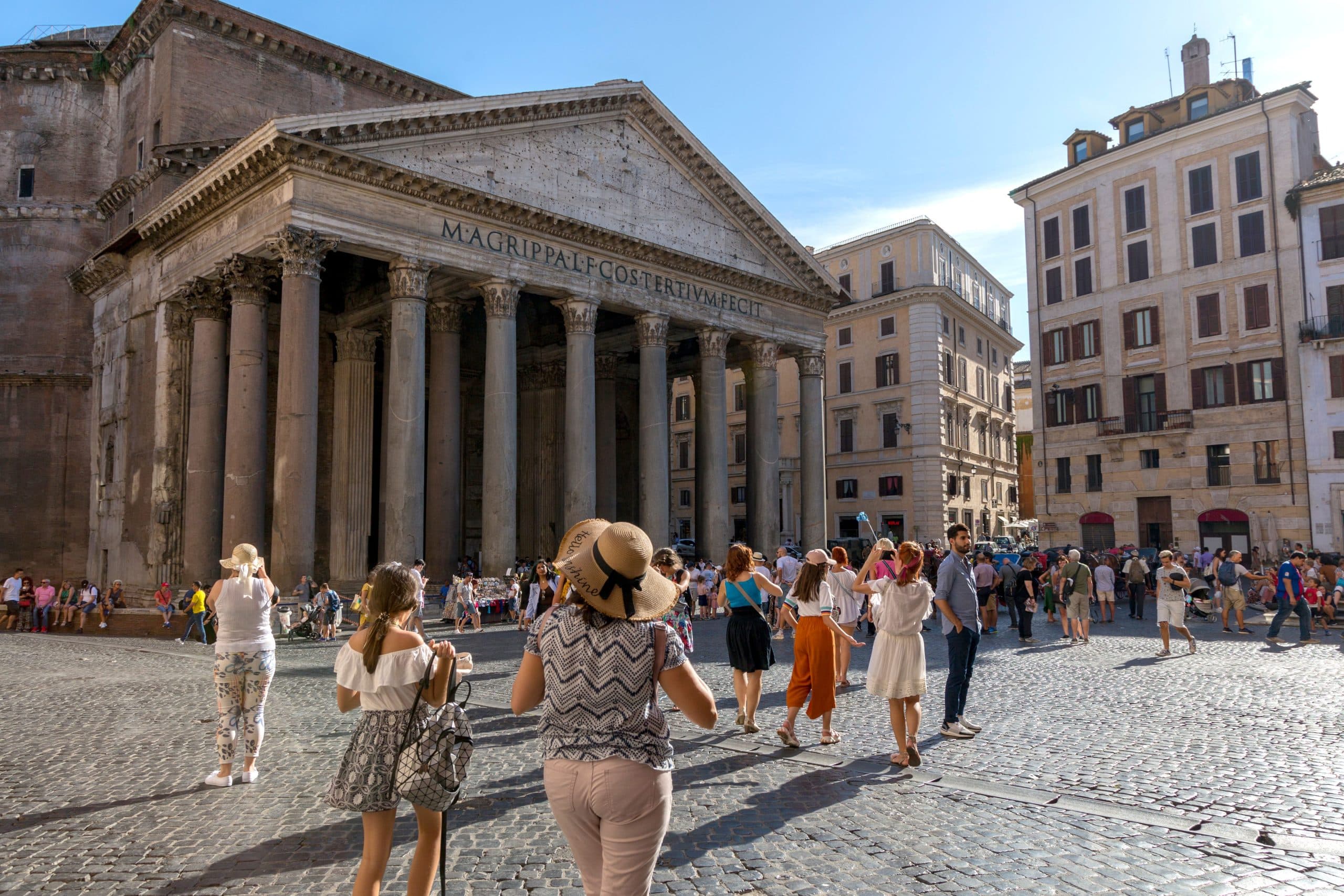
Free Rome is incomparable: walks through the centro storico, the Pantheon, the Spanish Steps, parks like Villa Borghese and Pamphilj, sunset on the Pincio, river walks along the Tiber. Many museums are free on the first Sunday of the month.
Uniplaces insight: Many Roman attractions you’d pay to see in any other city are simply free here. The Pantheon (free), the major basilicas, fountains and piazzas form a constant outdoor museum. You can experience world-class Rome on a near-zero culture budget.
Money-saving tips for students in Rome
- Live in San Lorenzo or Pigneto. Best value with strong student social scenes.
- Eat the pranzo, not dinner out — €8–€12 set lunches are a Roman institution.
- Use mercati rionali for fresh produce, not just supermarkets.
- Espresso at the bar, not at the table — same coffee, often half the price.
- Aperitivo as dinner. €8–€12 with a buffet of snacks beats most takeaways.
- First-Sunday free museums — plan your culture around them.
- Avoid tourist trattorias. A simple rule: if the menu has photos, walk on.
- ATAC monthly pass if you’re commuting; otherwise, single tickets and walking.
Frequently asked questions
How much money do I need per month to live in Rome as a student?
Most students budget €800–€1,200 a month all-in. San Lorenzo or Pigneto with home cooking keeps you near €850–€950; central Trastevere with regular socialising pushes towards €1,200+.
Is Rome expensive compared to other Italian cities?
Yes — Rome and Milan are the two priciest Italian student cities. Bologna, Florence and Turin are noticeably cheaper on rent, with similar food and transport costs.
How much is a shared room in Rome?
A room in a shared flat runs €450–€800, with most students paying €500–€650. San Lorenzo, Pigneto, Nomentano and Garbatella offer the best value; Trastevere and Prati are the priciest.
What’s the best transport pass?
The ATAC monthly abbonamento at around €35 is the standard; check the student annual pass (with ISEE eligibility) for steeper savings if you qualify.
How much do groceries cost?
Around €200–€300 a month for a student cooking at home. Lidl and Eurospin are cheapest; Conad and Coop are the mainstream choices; the mercati rionali beat them all on fresh produce.
Is eating out cheap in Rome?
For Italy yes, especially at lunch. A pranzo at a local trattoria runs €8–€12; pizza al taglio from €2; aperitivo with snacks for €8–€12. Avoid restaurants in tourist hotspots and you’ll eat well for very little.
Still planning your move?
Find verified student accommodation in Rome →