
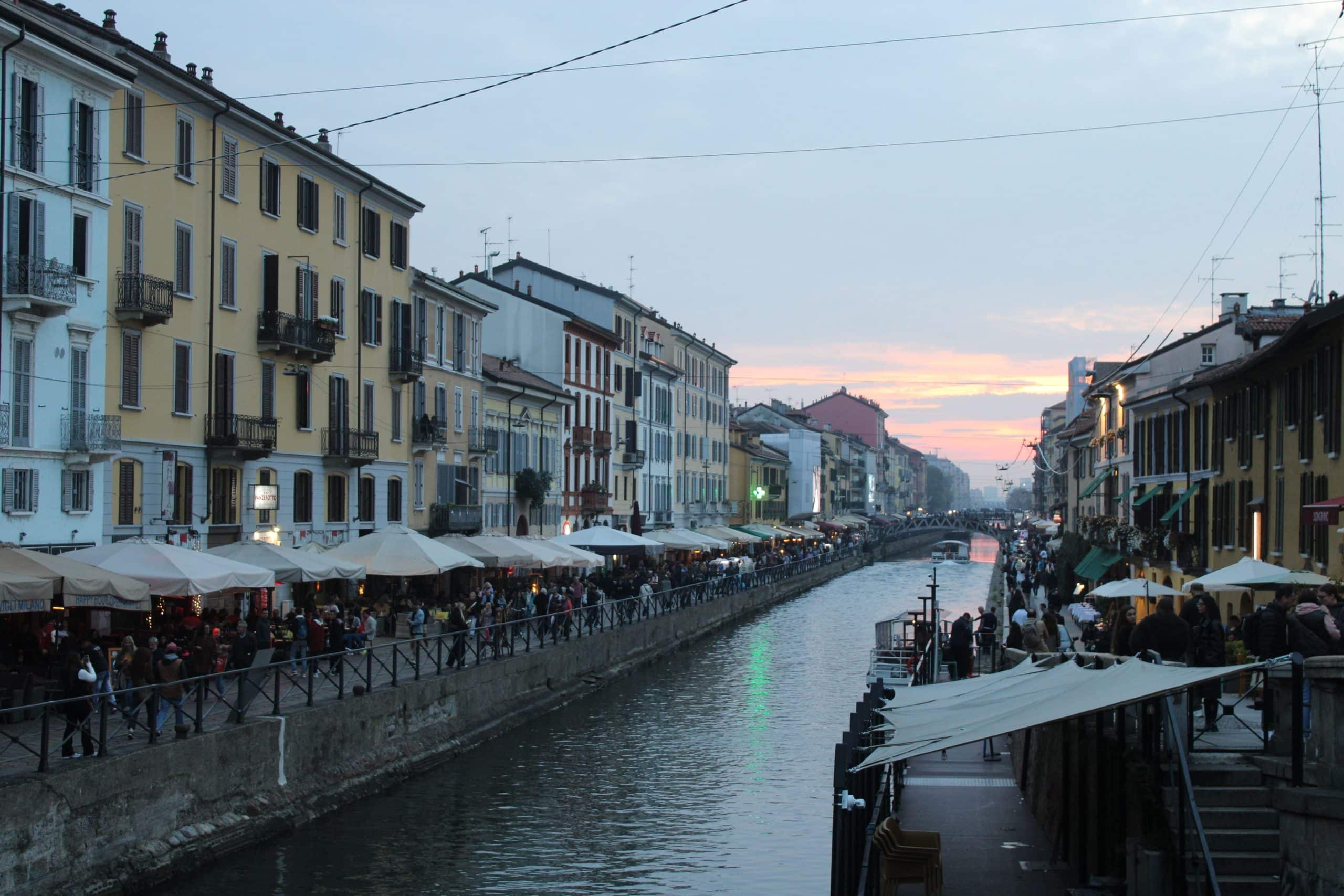
Milan is Italy’s business capital and most international city — fashion, finance, design, and the country’s biggest concentration of English-taught degree programmes. The trade-off is cost: Milan is the most expensive Italian city for students. The good news is that its public transport, university canteens and student infrastructure are also Italy’s best, taking real pressure off the budget if you use them.
This guide breaks down the cost of living in Milan in 2026 by category, with realistic numbers and city-specific tips.
Browse verified student accommodation in Milan
The total monthly budget at a glance
Most international students in Milan spend between €900 and €1,400 a month all-in:
- Rent (room in shared flat): €500–€800
- Utilities: €80–€150
- Groceries: €200–€300
- Public transport: €22–€39
- Eating out and going out: €100–€250
- Personal and miscellaneous: €50–€100
A student in Bovisa or Bicocca, cooking at home and using the university canteen, lands around €950–€1,100. A central life in Porta Romana or Navigli with regular aperitivo pushes towards €1,400+.
Rent and accommodation
Rent in Milan is meaningfully higher than other Italian cities:
- Shared room: €500–€800.
- Studio: €800–€1,300+.
- One-bedroom apartment: €1,000–€1,600+.
- Student residences: €700–€1,300+ (Camplus, Nido, Livensa, The Social Hub).
By neighbourhood, the rough picture for shared rooms:
- Città Studi: the main student district near Politecnico — €500–€700.
- Porta Romana / Guastalla: by Bocconi — €600–€800.
- Navigli: vibrant, expensive — €600–€800.
- Bovisa, Dergano: near Politecnico’s second campus, better value — €450–€650.
- Bicocca: near the namesake university, more affordable — €450–€600.
- Isola, NoLo: trendy, well-connected — €550–€700.
Uniplaces insight: Milan’s market is the priciest in Italy and good central rooms vanish fast. For a September move-in, start in May–June; for February, start in November–December. Bovisa and Bicocca offer the best value; Porta Romana and Navigli the priciest. See our guide to finding accommodation in Milan.
Utilities
Per person in a shared flat:
- Electricity and gas: €40–€80 (Milan winters get genuinely cold; heating drives bills up).
- Spese condominiali: €20–€50
- Internet: €10–€20 split
- Mobile: €8–€15
Total: roughly €80–€150 per month per person.
Groceries
Most students budget €200–€300 a month:
- Lidl, Eurospin, Aldi: the cheapest options.
- Esselunga: the dominant Lombard chain — slightly pricier but great range.
- Carrefour, Pam, Coop: mainstream.
- NaturaSì: organic and premium.
Crucially: university canteens (mense universitarie) in Milan are excellent and very cheap, with meal prices ranging €1–€7 depending on income (ISEE). A full meal at the canteen often costs less than ingredients for cooking at home — one of the single biggest savings available to students in Milan.
Public transport
Milan’s ATM network is Italy’s best — and the cheapest for under-26s:
- Abbonamento under-26: around €22/month for unlimited metro, tram and bus. Excellent value.
- Standard monthly: ~€39.
- Single ticket: €2.20, valid 90 minutes.
- BikeMi (public bikes): annual subscription ~€36.
The four metro lines plus extensive bus and tram coverage make the under-26 pass one of the smartest student investments in Milan.
Going out and leisure
Milan’s prices:
- Espresso at the bar: €1–€1.30
- Cappuccino: €1.50–€2
- Aperitivo: €8–€12 (Navigli, Brera, Isola — often with substantial buffet)
- Pizza + drink: €12–€18
- Dinner with wine: €20–€35
- Club entry: €15–€25
- Cinema: €8–€12
- Gym: €30–€60/month
Free Milan: walks through the Duomo and Galleria, the Parco Sempione, the Navigli canals at sunset, the rooftop view from San Siro (free during non-match hours), and frequent free events around the city’s many art and design fairs.
Uniplaces insight: Milan’s aperitivo culture is genuinely a money-saver if used right. €8–€12 for a drink at a generous bar buffet — particularly in Navigli — can replace dinner entirely. Plan your social life around it.
Money-saving tips for students in Milan
- Live in Bovisa, Bicocca or Dergano if budget matters most — saves €100–€200/month on rent.
- Get the ATM under-26 pass: €22 for everything is a steal.
- Eat at the mensa. €1–€7 ISEE-based meals are unbeatable.
- Shop at Lidl, Esselunga and Eurospin. Avoid central convenience stores.
- Aperitivo over dinner. Especially in Navigli and Brera, it’s the cheap way to socialise.
- Espresso at the bar, not the table. Italian rule that saves real money.
- BikeMi annual subscription beats single-use passes if you cycle regularly.
- Free design and fashion events: Milan’s calendar is full of openings, fashion week sideline events, and free design shows — keep an eye on local listings.
Frequently asked questions
How much money do I need per month to live in Milan as a student?
Most students budget €900–€1,400 a month all-in. Bovisa or Bicocca with home cooking and the mensa keeps you near €950–€1,000; central living in Porta Romana with regular aperitivo pushes towards €1,400+.
Is Milan really more expensive than Rome?
Yes — Milan is the most expensive Italian city for students, slightly above Rome. But it compensates with better transport, a wider range of English-taught programmes and stronger student infrastructure.
How much is a shared room in Milan?
A room in a shared flat runs €500–€800, with most students paying €550–€700. Bovisa, Bicocca and Dergano offer the best value; Porta Romana and Navigli the priciest.
What’s the best transport pass?
The ATM abbonamento under-26 at €22/month is exceptional value for unlimited metro, tram and bus. The standard monthly is €39.
Are university canteens worth using?
Yes — Milan’s university canteens (mense) are excellent, and ISEE-based prices range €1–€7 for a full meal. Often cheaper than cooking at home, with huge time savings.
How much do groceries cost?
Around €200–€300 a month for a student cooking at home. Lidl and Eurospin are cheapest; Esselunga is the local mainstay with better range.
Still planning your move?
Find verified student accommodation in Milan →