
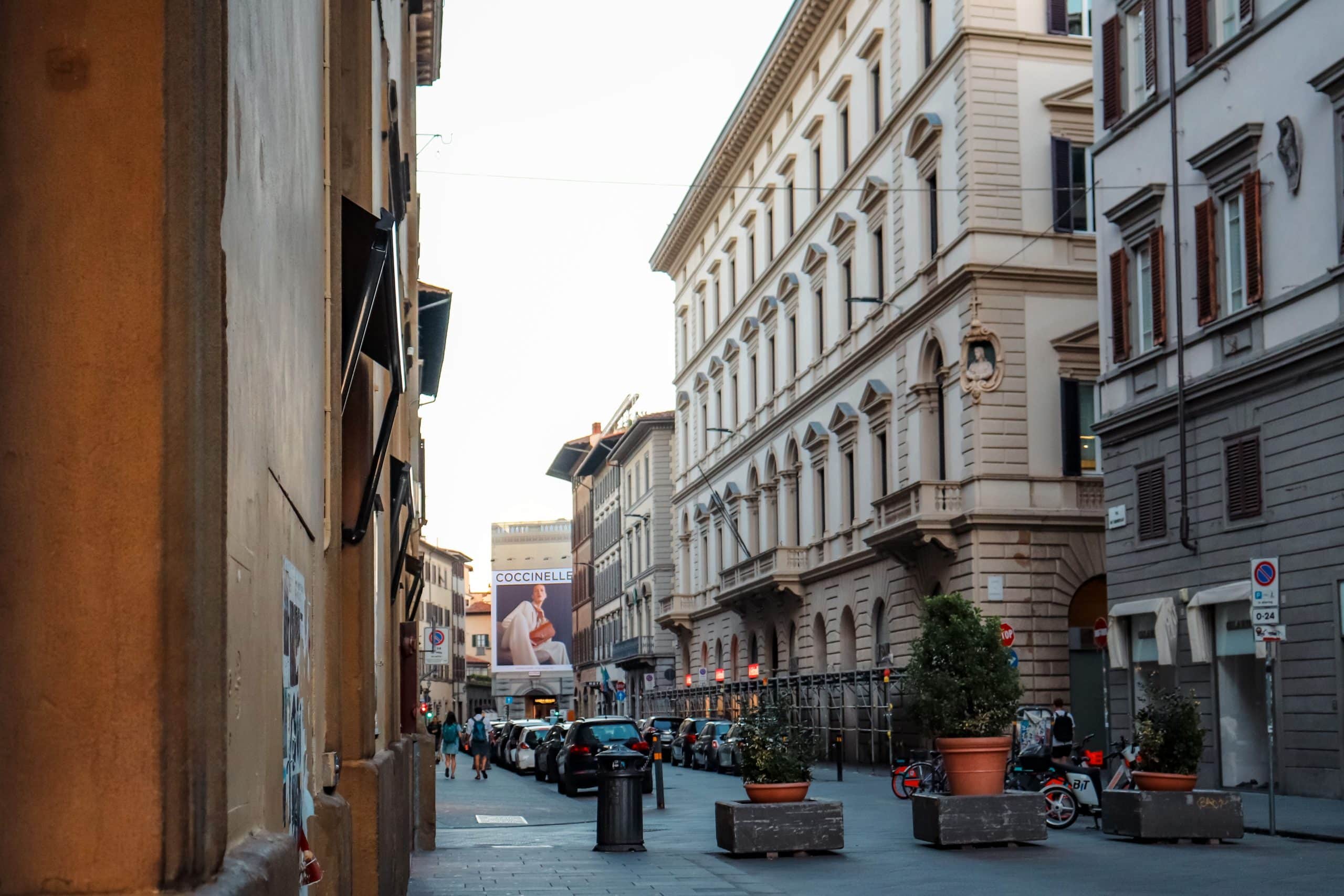
Florence offers a study experience unlike anywhere else — a UNESCO-listed Renaissance capital that’s also home to one of Italy’s biggest concentrations of art, design and study-abroad programmes. The catch is cost: limited central housing competes with lucrative tourist rentals, keeping rents higher per square metre than other Italian cities of its size. The upside is a compact, walkable city where you save on transport and have free world-class culture on your doorstep.
This guide breaks down the cost of living in Florence in 2026 by category, with realistic numbers and city-specific tips.
Browse verified student accommodation in Florence
The total monthly budget at a glance
Most international students in Florence spend between €850 and €1,300 a month all-in:
- Rent (room in shared flat): €400–€650
- Utilities: €70–€120
- Groceries: €180–€280
- Public transport: €0–€42 (walkable + bus pass when needed)
- Eating out and going out: €100–€220
- Personal and miscellaneous: €50–€100
A student in Novoli or San Frediano with home cooking lands around €850–€950. A central San Marco or Santa Croce room with regular aperitivo evenings pushes the budget closer to €1,300.
Rent and accommodation
Rent in Florence is high for the city’s size, driven by tourism and tight supply:
- Shared room: €400–€650.
- Studio: €700–€1,000+.
- One-bedroom apartment: €900–€1,400+.
- Student residences: €600–€1,000+ (Camplus, Student Hotel and others).
By neighbourhood, the rough picture for shared rooms:
- San Marco / San Lorenzo: the university district — €450–€650.
- Santa Croce / Sant’Ambrogio: central, foodie — €450–€650.
- Santa Maria Novella: central by the station — €450–€600.
- Oltrarno (Santo Spirito, San Niccolò): bohemian — €450–€600.
- Novoli: near the modern university campus, cheaper and more spacious — €350–€500.
- Campo di Marte: residential, well-connected — €400–€550.
Uniplaces insight: Florence’s rental market competes directly with short-term tourist lets, which is why prices stay high. Medium-term and student-specific contracts are increasingly common — securing one before arrival is the safest way to avoid the tourist-market scramble.
Utilities
Per person in a shared flat:
- Electricity and gas: €30–€60 (Tuscan winters bite; many older buildings are poorly insulated).
- Spese condominiali: €15–€35
- Internet: €10–€18 split
- Mobile: €8–€15
Total: roughly €70–€120 per month per person.
Groceries
Most students budget €180–€280 a month:
- Lidl, Esselunga, Eurospin: the cheapest options.
- Conad, Coop: mainstream with strong promotions.
- Mercato di Sant’Ambrogio, Mercato Centrale: excellent for fresh produce; Mercato Centrale’s upstairs food hall is good for a treat but tourist-priced.
Eating out is reasonable if you avoid the obvious tourist traps: a menù del giorno at a working trattoria runs €10–€14, a slice of schiacciata €2–€4, a panino con porchetta €5–€7, a coffee €1–€1.50 at the bar.
Public transport
Florence’s AT (formerly ATAF) network covers buses and trams:
- Abbonamento mensile: ~€42 for unlimited city travel.
- Abbonamento studenti (annuale): heavily discounted for under-26s.
- Tramway: connects the centre to Scandicci, Careggi hospital, and the airport.
- Single ticket: €1.50 onboard / €1.50 advance.
The historic centre is small and almost entirely walkable, so many students manage with single tickets and walking only — using a monthly pass only if commuting to Novoli or Campo di Marte regularly.
Going out and leisure
Florence’s prices:
- Espresso at the bar: €1–€1.30
- Aperitivo: €8–€12 (Santo Spirito, Sant’Ambrogio, San Niccolò)
- Pizza + drink: €12–€18
- Casual dinner with wine: €18–€30 (lower at working trattorias)
- Club entry: €10–€20
- Cinema: €8–€10
- Gym: €30–€55/month
- Museums: €12–€25 for major ones (Uffizi, Accademia); free for under-18s and reduced for EU students 18–25
Free Florence is huge: the Duomo exterior, Piazza della Signoria, Ponte Vecchio, Boboli Gardens (free on first Sunday), Piazzale Michelangelo for sunset, and many smaller churches that house genuine Renaissance masterpieces without ticket queues.
Uniplaces insight: EU students aged 18–25 get reduced entry (often around €2–€5) at major Italian state museums including the Uffizi and Accademia — bring your student ID. The first Sunday of the month, state museums are free for everyone.
Money-saving tips for students in Florence
- Live in Novoli or Campo di Marte if budget matters; €100–€150/month less than central rooms.
- Walk almost everywhere. The centre is tiny and walkable; you may not need a transport pass.
- Eat the menù del giorno at trattorias in non-tourist streets — €10–€14 for full meals.
- Shop at Lidl and Esselunga, and use the Mercato di Sant’Ambrogio for fresh produce.
- Avoid restaurants with photos in the menu. Always a tourist trap signal.
- EU student museum discounts and first-Sunday free entries — use them aggressively.
- Aperitivo in Santo Spirito or Sant’Ambrogio, not in tourist piazzas.
- Tuscany is a free weekend. Regional trains to Siena, Pisa or Lucca cost €7–€12 each way.
Frequently asked questions
How much money do I need per month to live in Florence as a student?
Most students budget €850–€1,300 a month all-in. Novoli or Campo di Marte with home cooking keeps you near €850–€950; central living with social life pushes towards €1,300.
Is Florence expensive compared to other Italian cities?
Higher than Bologna but generally below Milan. Rent is the main reason — the city’s tight supply and tourist economy keep central rents high. Food, transport and going out are similar to other mid-sized Italian cities.
How much is a shared room in Florence?
A room in a shared flat runs €400–€650, with most students paying €450–€550. Novoli and Campo di Marte are cheaper; the historic centre commands a premium.
Do I need a public transport pass?
Often not — the centre is walkable. A monthly pass (~€42) makes sense if you commute to Novoli or Careggi regularly; otherwise single tickets and walking work fine.
How much do groceries cost?
Around €180–€280 a month for a student cooking at home. Lidl and Esselunga are cheapest; the Mercato di Sant’Ambrogio is the best place for fresh produce away from tourist crowds.
Are Florence’s museums expensive?
Major ones like the Uffizi and Accademia charge €12–€25, but EU students 18–25 get steeply discounted entry (often €2–€5), and on the first Sunday of the month state museums are free for everyone.
Still planning your move?
Find verified student accommodation in Florence →