
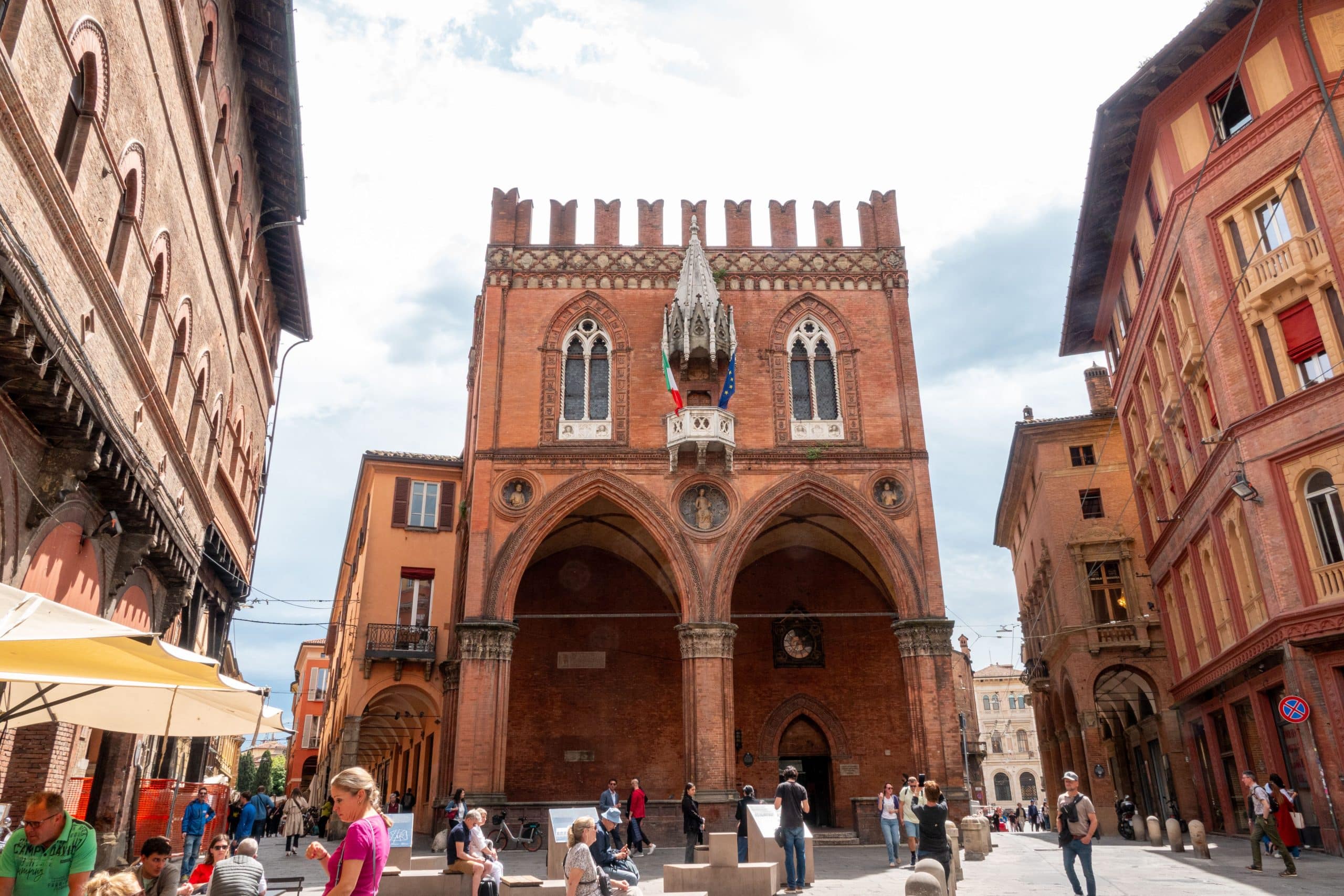
Few cities are as student-shaped as Bologna. With roughly a third of the population enrolled at the University of Bologna — the oldest in the Western world — the whole city is geared towards young people. The downside: that demand keeps the rental market competitive. The upside: everything else, from food to transport to social life, is affordable and student-friendly.
This guide breaks down the cost of living in Bologna in 2026 by category, with realistic numbers and city-specific tips.
Browse verified student accommodation in Bologna
The total monthly budget at a glance
Most international students in Bologna spend between €800 and €1,100 a month all-in:
- Rent (room in shared flat): €300–€650
- Utilities: €70–€120
- Groceries: €180–€280
- Public transport: €0–€40 (bike or pass)
- Eating out and going out: €100–€220
- Personal and miscellaneous: €40–€80
A student in San Donato or Bolognina with a bike and home cooking lands around €800–€900. A central room in the Zona Universitaria with regular aperitivo and Piazza Verdi nights pushes towards €1,100.
Rent and accommodation
Bologna’s market is competitive because students make up so much of the city’s population:
- Shared room: €300–€650, depending heavily on neighbourhood.
- Studio: €600–€900+.
- One-bedroom apartment: €800–€1,300+.
- University halls of residence: €350–€500 (limited spots, usually prioritising Italian students).
- Private student residences: €500–€900+ (Camplus and others).
By neighbourhood, the rough picture for shared rooms:
- Zona Universitaria (Via Zamboni, around Piazza Verdi): the student heart — €500–€650.
- Centro storico / Quadrilatero: beautiful and central, with a tourist premium — €500–€700.
- Bolognina: up-and-coming north of the centre — €350–€500.
- San Donato, Massarenti: budget-friendly with easy campus access — €300–€450.
- San Ruffillo, Toscana: cheapest, near parks — €280–€400.
Uniplaces insight: Demand spikes hard each September and February in Bologna because of the sheer student-to-population ratio. Booking a verified room before you arrive is the safest route — the centro storico’s prettier flats often go in days.
Utilities
Per person in a shared flat:
- Electricity and gas: €30–€60 (Po Valley winters can be cold; summers hot and humid).
- Spese condominiali: €15–€35
- Internet: €10–€18 split
- Mobile: €8–€15
Total: roughly €70–€120 per month per person.
Groceries
Bologna’s food culture is famous — and supermarkets are reasonable. Most students budget €180–€280 a month.
- Lidl, Eurospin, In’s Mercato: the cheapest options.
- Conad, Coop: Italian mainstays with strong loyalty discounts.
- Mercato delle Erbe, Mercato Albani: excellent fresh produce, fish, cheese.
- Quadrilatero food market: tourist-priced for groceries, worth it for a one-off experience.
Eating out is exceptional value: a plate of fresh tagliatelle al ragù at a neighbourhood osteria runs €8–€12, a Bologna mortadella sandwich €3–€5, a coffee €1–€1.50, an aperitivo with snacks €7–€10.
Public transport
Bologna’s ATC network (TPER) covers buses across the city:
- Abbonamento mensile (monthly): ~€36 for unlimited city buses.
- Abbonamento studenti annuale: heavily discounted for under-26s and based on ISEE.
- Single ticket: €1.50 onboard / €1.30 in advance.
But the real Bologna transport answer is a bike. The city is small, flat and bike-friendly; most students buy a second-hand bike (€40–€100) and rarely use the bus.
Going out and leisure
Bologna’s prices:
- Espresso at the bar: €1–€1.30
- Aperitivo: €7–€10 (often with substantial snacks)
- Tagliatelle al ragù + drink: €10–€15
- Casual dinner with wine: €15–€25
- Club entry: €10–€15
- Cinema: €7–€10 (Bologna has Italy’s biggest film festival, Il Cinema Ritrovato)
- Gym: €25–€45/month
Free Bologna: the 40 km of UNESCO-listed porticoes (covered arcades), the Two Towers, Piazza Maggiore, the Quadrilatero, the cinema and music initiatives that the student-heavy city subsidises. Piazza Verdi is the social hub where students gather for €2–€3 beers and free conversation every evening.
Uniplaces insight: Bologna’s student social life famously runs on Piazza Verdi and the porticoes. A €2 beer from a nearby supermarket and an evening on the steps with friends is the cheapest entertainment in the city — and arguably the best.
Money-saving tips for students in Bologna
- Buy a second-hand bike — €40–€100 for a city like Bologna pays for itself in two months of bus passes.
- Live in San Donato or Bolognina if budget matters — central enough, much cheaper.
- Eat at the mensa — Bologna’s university canteens offer ISEE-based pricing similar to Milan.
- Aperitivo as dinner — Bologna does this well, often with hot snacks included.
- Shop at Lidl, In’s and the mercati rather than central supermarkets.
- Use Continente-style loyalty cards at Coop and Conad — the discounts are real.
- Free cinema and culture: Bologna’s student-heavy economy means many free or near-free film screenings, gigs and events year-round.
- Cheap rail travel: Bologna is Italy’s rail hub — frequent regional trains to Florence, Modena and Ferrara, often €5–€10.
Frequently asked questions
How much money do I need per month to live in Bologna as a student?
Most students budget €800–€1,100 a month all-in. San Donato or Bolognina with a bike and home cooking keeps you near €800–€900; central living with regular aperitivo nights pushes towards €1,100+.
Is Bologna cheaper than Rome or Milan?
Yes — roughly 15–20% cheaper than Milan and 10–15% cheaper than Rome, primarily on rent. Food, transport and going out are similar.
How much is a shared room in Bologna?
A room in a shared flat runs €300–€650, with most students paying €400–€500. The Zona Universitaria and historic centre are most expensive; San Donato, Bolognina and Massarenti are cheaper.
Do I need a public transport pass in Bologna?
Often not. The city is small and flat, and most students buy a second-hand bike for €40–€100. A monthly pass (~€36) is useful only if you commute beyond the centre regularly.
How much do groceries cost?
Around €180–€280 a month for a student cooking at home. Lidl and Eurospin are cheapest; Coop and Conad are mainstream; the Mercato delle Erbe is best for fresh produce.
Why is Bologna so popular with students?
It’s the oldest university in the Western world, roughly a third of the population is students, the food is legendary, and the city is compact, walkable, and socially geared towards young people. Quality of student life relative to cost is among the best in Italy.
Still planning your move?
Find verified student accommodation in Bologna →